


A translated workplace safety standard is a work health and safety (WHS) document, procedure, or regulatory guideline that has been converted from English into another language so that workers who are not proficient in English can understand and act on it. If you are an employer, the immediate steps are: assess which languages your workers speak, identify your highest-risk documents, and request certified translations before the next induction or toolbox talk. If you are a worker who cannot understand a safety instruction, you have the right to stop work until it is explained in a language you can follow.
Why does this matter right now? Australian WHS laws place a duty on every person conducting a business or undertaking (PCBU) to ensure workers can actually understand safety information, not merely receive it. English-only materials handed to a worker who speaks Mandarin, Arabic, or Vietnamese can leave a PCBU exposed to prosecution if an incident occurs.
- Assess today: Count the languages spoken on your site. A simple sign-in sheet or HR record is enough to start.
- Request translation: Prioritise induction packs, emergency procedures, and Safe Work Method Statements (SWMS) first.
- Stop work if unclear: Workers should know they can pause a task and ask for clarification without fear of reprisal.
Key figure: Safe Work Australia publishes core WHS information sheets in 11 languages, which signals the scale of the multilingual need regulators already recognise.
Key takeaways
Translated workplace safety standards are a legal obligation under Australian WHS law, not a courtesy, and the quality of those translations directly determines whether workers can act safely on the information they receive.
| Point | Details |
|---|---|
| Legal duty is clear | PCBUs must ensure workers understand safety information; English-only materials can breach that duty for non-English speakers. |
| Prioritise by risk | Translate induction packs, emergency procedures, and SWMS first before lower-risk documents. |
| NAATI is the quality floor | For permanent, high-risk WHS documents, use a NAATI-certified translator with OHS subject-matter experience. |
| Test before you file | Community testing with two or three target-language workers catches errors that back-translation misses. |
| Certitranslate for certified WHS work | Certitranslate provides NAATI-certified WHS translations across 120+ languages with bilingual review and version control. |
Table of Contents
- What Australian WHS law says about translated safety information
- Who should produce your WHS translations?
- Which WHS materials should you translate first?
- Quality and accuracy: how to get WHS translations right
- A step-by-step checklist for rolling out translated WHS materials
- Where to find official Australian translated WHS resources
- Machine translation: where it helps and where it can get workers hurt
- How Certitranslate handles WHS document translations
- Why getting this right is worth more than the translation cost
- Certitranslate: certified WHS translations with NAATI-qualified translators
- Sources
What Australian WHS law says about translated safety information
The legal foundation sits in the model Work Health and Safety Act, adopted across most Australian states and territories. Under that framework, PCBUs must ensure workers understand safety information so far as is reasonably practicable. That phrase carries real weight: if a worker cannot understand English and the only safety instruction provided is in English, the PCBU has likely not met its duty.
Standards Australia and ISO standards are not laws in themselves unless a piece of legislation specifically references them. They function as authoritative guidance for designing safe systems, and they become practically important when you are translating technical procedures into workplace practice for a multilingual team.
Regulator guidance across Safe Work Australia and state WorkSafe bodies consistently recommends three things:
- Use plain English source documents before commissioning any translation.
- Engage translators who are familiar with occupational health and safety (OHS) terminology.
- Test translations with workers from the target language group before rolling them out.
Western Australia goes further, noting that WHS protections apply to all workers including temporary visa holders, and that communication with culturally and linguistically diverse (CALD) workers should combine translated documents, face-to-face explanation, and pictograms.
Who should produce your WHS translations?
Choosing the right provider depends on the document type, the risk level, and how permanently the content will be used. The table below maps the main options.
| Provider type | Best for | Quality floor | Limitations |
|---|---|---|---|
| In-house bilingual staff | Verbal toolbox talks, quick clarifications | Convenient, low cost | No formal accountability; terminology gaps in technical content |
| NAATI-certified translator | Permanent written documents, SWMS, induction packs, legal submissions | Highest; accepted by regulators and courts | Higher cost; lead time needed |
| Professional translation agency (NAATI-staffed) | Large-volume projects, equipment manuals, multi-language rollouts | High when NAATI translators are used | Varies by agency; confirm NAATI credentials |
| TIS National (Translating & Interpreting Service) | Face-to-face or telephone interpretation during training, incident interviews | Government-backed, available continuously | Interpretation only, not written translation |
For any document that will be retained, submitted to a regulator, or used in formal training, a NAATI-certified translator is the minimum standard. NAATI (National Accreditation Authority for Translators and Interpreters) is Australia’s only nationally recognised credentialling body for translators and interpreters. A NAATI credential means the translator has passed rigorous competency testing in both the source and target languages, and that their work carries a level of accountability that bilingual staff simply cannot provide.
TIS National fills a different gap: it is the right call when a worker needs real-time verbal explanation during a safety induction or after an incident, not when you need a document that will be filed and referenced for months.
Pro Tip: Ask any agency or freelancer you engage whether their translators hold a NAATI credential in the specific language pair you need. A general translation qualification from another country is not equivalent.
WorkSafe Victoria’s compliance code specifically recommends using translators familiar with OHS and testing translations with the target community before finalising them. That is not optional best practice; it is regulator-backed guidance that a court or inspector would reference.
Which WHS materials should you translate first?
Not everything needs to be translated at once. Rank your effort by risk and frequency of use.
- Site induction materials — the first thing a new worker encounters; if they cannot understand it, every subsequent safety instruction is compromised.
- Emergency procedures — evacuation routes, muster points, fire warden contacts. A worker who cannot read the emergency plan in a crisis is a direct liability.
- Safe Work Method Statements (SWMS) and Standard Operating Procedures (SOPs) — for high-risk construction work, a SWMS is legally required; workers must understand the controls listed.
- Critical equipment manuals and operating instructions — manufacturer-supplied translations are a good starting point, but verify they match your site-specific setup. See the step-by-step guide to technical manual translation for how to handle gaps.
- Hazard and chemical signage — GHS pictograms help, but supplementary text in the worker’s language removes ambiguity around chemical storage and PPE requirements.
- Drug, alcohol, and fatigue policies — workers need to understand the consequences of a positive test or a fatigue declaration, not just sign a form they cannot read.
- Incident and near-miss reporting forms — if a worker cannot fill in a report, near-misses go unreported and hazards persist.
For workers with low literacy in their own language, written translation alone is not enough. WorkSafe WA recommends combining translated documents with pictograms and face-to-face communication. Audiovisual formats, short-form video walkthroughs, and illustrated quick-reference cards are worth the extra production cost for high-turnover or high-risk sites.
- Prefer formats that do not require strong literacy: pictogram-led signage, QR-coded video instructions, colour-coded hazard zones.
- Keep written translations short and direct; a translated SWMS that mirrors the plain English original is far easier to follow than one padded with legal boilerplate.
Quality and accuracy: how to get WHS translations right
The single biggest source of translation failure in safety documents is a poor source document. If the English original is full of passive constructions, undefined acronyms, and compound noun phrases, the translator is working against the text from the start.
Start with a plain English version. Strip jargon, shorten sentences, and define any technical term the first time it appears. WorkSafe Victoria’s compliance code makes this explicit: plain English originals are a prerequisite, not a nice-to-have.
Pro Tip: Run your source document through a readability checker before sending it to a translator. Aim for a Flesch-Kincaid grade of 8 or below for safety-critical content. Simpler source text produces safer translations.
Once you have a clean source, apply these quality controls:
- Translator subject-matter fit: Confirm the translator has OHS or technical experience in the relevant industry, not just general language competency.
- Back-translation check: Have a second bilingual person translate the finished document back into English without seeing the original. Gaps in meaning become obvious fast.
- Community testing: Share the translated document with two or three workers from the target language group and ask them to explain back what it means. This catches idiomatic errors that back-translation misses.
- Manufacturer-supplied translations: For equipment manuals, always request the manufacturer’s own translated version first. It is usually the most technically accurate starting point, though it may need localisation for Australian regulatory context.
- Version control: Date every translated document and link it to the English source version number. When the English version changes, the translation must be updated.
ISO standards provide a reference framework for translation quality in technical contexts, though they are guidance rather than mandatory requirements in Australian workplaces.
A step-by-step checklist for rolling out translated WHS materials
This is the order that works in practice.
- Audit your workforce languages. Use HR records, sign-in sheets, or a short anonymous survey. You need to know which languages are spoken and by how many workers before you can prioritise.
- Map documents to risk level. List every WHS document you use and rate each one: high risk (emergency, SWMS, induction), medium risk (policies, reporting forms), low risk (general notices).
- Check what already exists. Before commissioning anything, check Safe Work Australia’s Language Hub and state WorkSafe sites. Official translations of core WHS materials may already be available for free.
- Brief your translator properly. Provide the plain English source, the industry context, the target audience’s literacy level, and any site-specific terminology list. A good brief cuts revision rounds.
- Procure with NAATI preference. For high-risk documents, specify NAATI-certified translators in your brief. For business documents requiring translation, this is the standard that regulators and tender assessors expect.
- Test with workers before rollout. Run a short comprehension check with two or three workers from the target language group. Document the testing date and outcomes.
- Train supervisors. Translated documents only work if supervisors know they exist and know how to direct workers to them.
- Record everything. Keep a translation register: document name, source version, language, translator credentials, testing date, and next review date.
- Schedule updates. Set a calendar reminder to review translations whenever the English source changes or when legislation is updated. Stale translations can be as dangerous as no translation.
Where to find official Australian translated WHS resources
Regulators have done a significant amount of this work already. Use these sources before commissioning bespoke translations.
| Resource | Languages / scope | Best used for |
|---|---|---|
| Safe Work Australia Language Hub | 11 languages; core WHS rights and obligations | Worker induction, rights awareness |
| WorkSafe Victoria translated resources | Multiple languages; compliance code guidance | Employer obligations, communication planning |
| WorkSafe ACT translated guidance notes | Multiple languages; topic-specific guidance notes | Topic-specific worker instruction |
| WorkSafe WA migrant worker resources | Multiple languages; rights and reporting | Migrant and temporary visa workers |
| TIS National | Many languages; telephone and on-site interpreting | Real-time verbal interpretation |
| NAATI directory | All languages; certified translator search | Procuring certified written translations |
Government translations are authoritative for general WHS rights and obligations. They are not always sufficient for site-specific procedures, plant-specific operating instructions, or documents that reference your internal processes. When the government text does not match your workplace’s actual procedures, commission a bespoke translation and note where it diverges from the official version.
- Always check the publication date on government translations and confirm the content reflects current legislation.
- For WorkSafe ACT guidance notes, workers should not undertake work they cannot understand — a principle that applies nationally.
Machine translation: where it helps and where it can get workers hurt
Machine translation (MT) tools like Google Translate or DeepL can produce a readable first draft in seconds. For a low-risk internal notice or a frequently changing roster update, that speed has real value. For safety-critical content, the risk profile is different.
The core problem is that MT systems optimise for fluency, not accuracy. A sentence that reads naturally in the target language can still carry a subtly wrong meaning, and in a SWMS or emergency procedure, “subtly wrong” can mean a worker takes the wrong action under pressure.
- Never rely on MT alone for: emergency evacuation procedures, SWMS for high-risk construction work, chemical handling instructions, or any document that will be submitted to a regulator or used as evidence.
- MT can be useful for: generating a first draft that a human translator then post-edits; translating frequently updated, low-risk content like shift schedules or general notices; giving a bilingual supervisor a rough sense of a foreign-language document before formal translation is commissioned.
- The hybrid approach: MT first draft plus human post-editing by a NAATI-certified translator is a legitimate cost-saving method for medium-risk documents with high update frequency. It is not appropriate for high-risk documents regardless of cost pressure.
Technical equipment manuals require human translation or human post-editing to avoid dangerous mistranslations. A forklift operating manual translated by MT alone has produced errors in load capacity figures and emergency stop sequences — the kind of mistake that does not show up until an incident occurs.
Pro Tip: If you use MT as a first draft, always have the output reviewed by a NAATI-certified translator before any worker sees it. Keep the MT draft and the reviewed version on file separately so you can demonstrate the quality control step.
Legal exposure from a mistranslated safety document is real. If a worker is injured and the translated SWMS they were given contained an error, the PCBU’s defence is significantly weakened. Documented quality controls, including who translated the document and what review process was followed, are the evidence that matters.
How Certitranslate handles WHS document translations
Certitranslate’s workflow for WHS documents follows the regulator-recommended sequence closely. The process starts with a plain English source review: if the source document contains ambiguous phrasing or undefined acronyms, the team flags these before translation begins rather than carrying the ambiguity into the target language.

From there, the document goes to a NAATI-certified translator with relevant industry experience. For construction SWMS, that means a translator familiar with Australian construction terminology. For chemical handling procedures, it means someone with OHS or laboratory background. Subject-matter fit is not optional for safety-critical content.
Quality controls applied to every WHS translation include:
- Bilingual reviewer check independent of the primary translator.
- Back-translation verification for high-risk documents.
- Version control linking each translated file to the English source version number.
- Retention of original source documents alongside the certified translation.
- Certification statement confirming NAATI credentials and translation accuracy.
Use cases where a certified provider is strongly recommended include: formal tender submissions requiring translated WHS plans, equipment manuals for plant with Australian compliance obligations, incident reports that may become legal documents, and induction packs for large multilingual workforces where consistency across language versions must be verified.
For translation requirements in Australian tenders, the standard expected by procurement assessors is NAATI-certified translation with a signed certification statement. Anything less creates a gap in your compliance record.
Why getting this right is worth more than the translation cost
The business case for proper WHS translation is straightforward once you look past the per-word cost. Workplaces with language-accessible safety programmes tend to have fewer incidents, lower staff turnover, and stronger cohesion among multilingual teams. The link between language accessibility and organisational outcomes is well-documented: when workers understand what is expected of them, they perform more safely and stay longer.
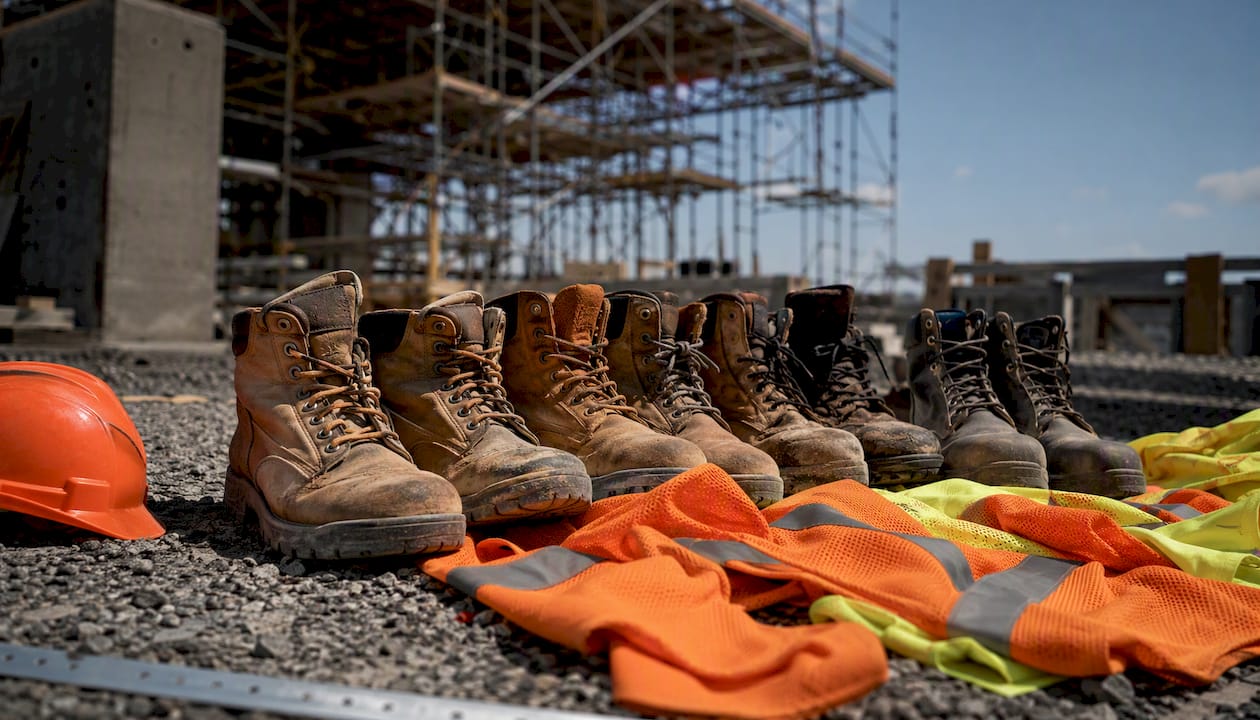
The argument I find most compelling is not the legal one, though that is real. It is the practical one: a translated induction pack costs a fraction of a single workers’ compensation claim, and it takes less time to produce than the paperwork that follows a serious incident. Start with induction materials and emergency procedures. Get those right, test them with your workers, and document the process. Everything else can follow in order of risk.
One thing most employers underestimate is the value of the testing step. Handing a translated document to a bilingual worker and asking them to explain it back to you takes twenty minutes. That twenty minutes can catch a translation error that would otherwise sit in a filed SWMS for two years until something goes wrong.
Certitranslate: certified WHS translations with NAATI-qualified translators
Accurate WHS translations are not a compliance checkbox. They are the difference between a worker who knows what to do in an emergency and one who does not.
Certitranslate provides NAATI-certified translation services for WHS documents across more than 120 languages, with translators matched to your industry. Services relevant to PCBUs and safety managers include certified translation of SWMS and SOPs, technical equipment manual translation, induction pack translation with bilingual review, and urgent turnaround for time-sensitive compliance documents. Every translation comes with a signed NAATI certification statement accepted by Australian regulators, courts, and tender assessors. To get a quote or discuss your WHS translation needs, visit Certitranslate.
Sources
The following sources are the authoritative references for Australian WHS translation obligations and resources.
- Culturally and linguistically diverse frequently asked questions — WorkSafe ACT
- Communicating occupational health and safety across languages compliance code — WorkSafe Victoria
- Work health and safety in Australia: information for migrant and multicultural workers available in 11 languages — Safe Work Australia
- Migrant workers — WorkSafe Western Australia
Check your state or territory WorkSafe body for local variations, as some jurisdictions publish additional translated resources or have specific compliance codes beyond the national model.
Recommended
- Translation requirements for Australian tenders: 2026 guide – CertiTranslate – Translations by NAATI Certified Translators
- How QA documents are translated for Australian compliance – CertiTranslate – Translations by NAATI Certified Translators
- Why original documents accompany translations: 2026 guide – CertiTranslate – Translations by NAATI Certified Translators
- Why professional credential translation matters in Australia – CertiTranslate – Translations by NAATI Certified Translators