


A compliant translation of a statutory declaration in Australia must be completed by a NAATI-certified translator, with the translator’s stamp and practitioner ID appearing on every translated page, accompanied by a signed certification statement, and submitted alongside a copy of the original document. That is the non-negotiable baseline. Miss any one of those elements and the receiving agency will almost certainly send it back.
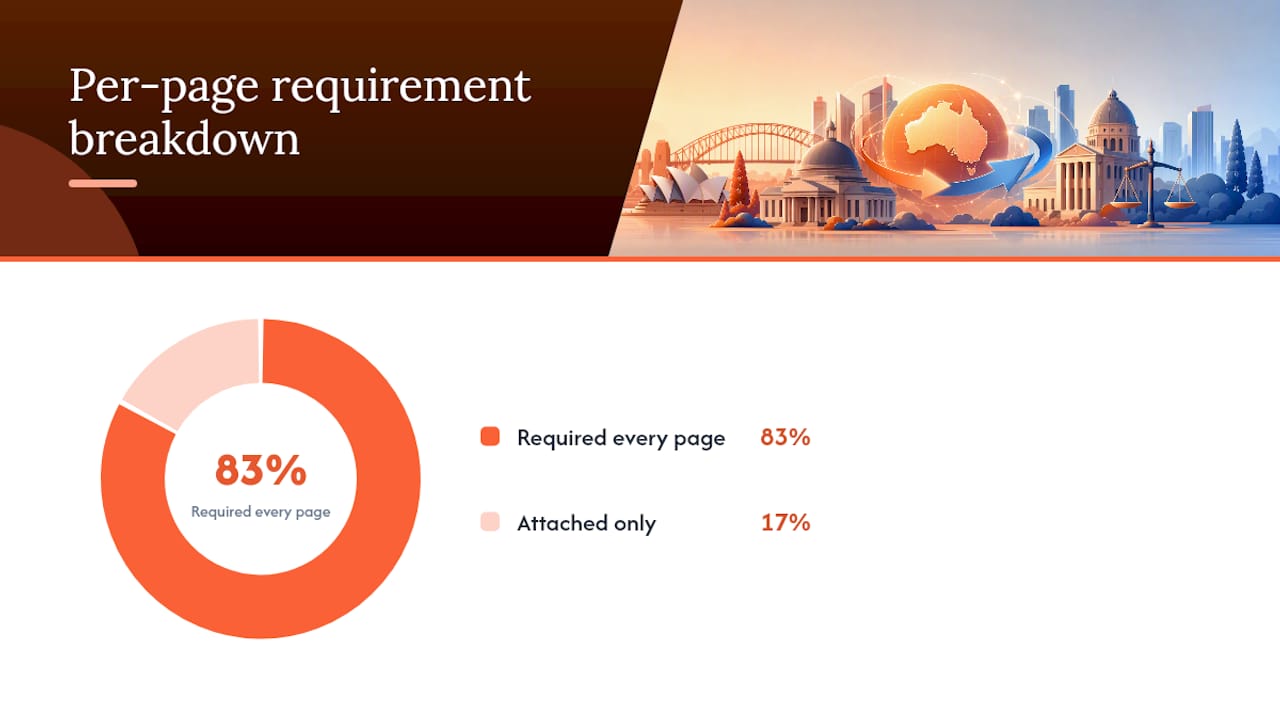
Here is what must appear on every page of a compliant translation:
- Translator’s NAATI stamp with practitioner ID number
- Translator’s full name, language pair, and credential type
- Date the stamp was generated or applied
- Translator’s signature or authenticated digital signature
- A QR code or web link (for digital stamps only)
- Signed certification statement confirming accuracy
- Copy of the original source document attached
Pro Tip: Before ordering, check the receiving agency’s preferences directly. Some agencies accept digitally stamped PDFs; others still require a hard copy with an inked stamp, or a notarised translator statement. Getting this wrong adds days to your timeline.
Key takeaways
A compliant statutory declaration translation in Australia requires a NAATI-certified translator, a stamp with practitioner ID on every page, and a signed certification statement attached to the original document.
| Point | Details |
|---|---|
| NAATI credential is mandatory | Use a Certified Translator or Recognised Practising Translator for all Australian agency submissions. |
| Stamp every page | The translator’s stamp with practitioner ID must appear on every translated page, not just the cover. |
| Attach the original | A copy of the source document must accompany the translation for agency acceptance. |
| Check agency format preferences | Some agencies require hard copy; others accept digitally stamped PDFs. Confirm before ordering. |
| Certitranslate delivers compliant translations | NAATI-certified translators, per-page stamping, and express turnaround available for statutory declarations. |
Table of Contents
- What DFAT and major Australian agencies expect from official translations
- Who may provide a compliant translation in Australia?
- Page-by-page checklist: what to include on a translated statutory declaration
- When does a statutory declaration need a certified translation?
- How to order a compliant translation: steps, costs, and turnaround
- Digital statutory declarations and electronic signatures
- Why translations get rejected and how to avoid the most common pitfalls
- How NAATI certification works and why it matters for statutory declarations
- Why NAATI-certified translations are worth the investment
- Certitranslate’s certified translation service for statutory declarations
- Sources
What DFAT and major Australian agencies expect from official translations
The DFAT requirements for translators set the authoritative standard most Australian agencies follow. Every translated page must carry the translator’s NAATI stamp containing: practitioner ID, language and direction of translation, credential type, the date the stamp was generated, and a signature or digitised authentication statement. For digital stamps, a QR code or web link that verifies the stamp’s authenticity is also required.
The Department of Home Affairs, AHPRA, courts, and ASIC all operate from a similar baseline. AHPRA requires that translations into English be completed by a NAATI-accredited translator when done in Australia, with the translator’s identification, printed name, address, phone number, and an original signed statement of accuracy on every page. Home Affairs and the courts expect full translations rather than extracts — a partial translation of a statutory declaration is rarely accepted.
Key agency requirements at a glance:
- DFAT: NAATI stamp with practitioner ID, language, credential, date, and signature on every page; digital stamps must include QR/web verification
- Department of Home Affairs: NAATI-certified translation plus signed translator statement; full document, not extracts
- AHPRA: NAATI-accredited translator; ID, name, address, phone, and signed accuracy statement on every page
- Courts and ASIC: Certified translation with accompanying signed translator statement; full translation required
Key date: DFAT accepts only translations completed under the current NAATI Certification System for submissions dated from 1 July 2018 onwards. Translations predating that cutoff are assessed differently.
The Attorney-General’s Department also notes that Commonwealth, state, and territory statutory declaration requirements differ. Always confirm with the requesting organisation which jurisdiction’s rules apply to your document.
Who may provide a compliant translation in Australia?
For documents submitted to Australian authorities, a NAATI-certified translator is the standard requirement. NAATI issues two main credential types relevant here: the Certified Translator (CT) credential, which requires passing a rigorous competency test, and the Recognised Practising Translator (RPT) credential, which recognises demonstrated professional practice. Both are accepted by DFAT and most major agencies.
The distinction between translations completed inside and outside Australia matters. When a translation is done in Australia, NAATI certification is effectively mandatory for immigration, court, and professional registration purposes. For documents translated overseas, some agencies accept translations completed by a translator approved by an Australian embassy or consulate, or by a recognised local authority in the source country. However, this is not universal.
Acceptable translator categories:
- NAATI Certified Translator (CT) — the standard for most Australian submissions
- NAATI Recognised Practising Translator (RPT) — accepted by DFAT and Home Affairs
- Overseas translator approved by an Australian embassy or consulate — accepted by some agencies for documents translated outside Australia
- Translator recognised by a local authority in the source country — check with the receiving agency first
Pro Tip: If your document was translated overseas, ask the receiving agency in writing whether they accept that translation or require a fresh NAATI-certified version. Getting a written confirmation protects you if there is a dispute later. Guidance on choosing the right certified translator can help you ask the right questions.
The NAATI Certified Translator pathway requires candidates to demonstrate transfer competency, language competency, and ethical practice before certification is granted. That testing rigour is precisely why Australian authorities treat the credential as a quality signal.
Page-by-page checklist: what to include on a translated statutory declaration
Every page of the translation needs to carry specific information. The following covers what must appear on each translated page and how to handle the original document.
| Element | Required on every translated page? | Notes |
|---|---|---|
| Translator’s NAATI stamp | Yes | Must include practitioner ID, name, language pair, credential type |
| Date of stamp | Yes | Date stamp was generated or applied |
| Translator’s signature | Yes | Ink signature or authenticated digital signature |
| QR code / web link | Yes (digital only) | Required for digital NAATI stamps for verification |
| Signed certification statement | Yes | Confirms translation is accurate and complete |
| Copy of original document | Attached | Source document must accompany the translation |
Beyond the per-page stamp, the following elements also require attention:
- Annexures: Translate all annexures attached to the statutory declaration; label each with the corresponding annexure reference from the original
- Seals and official stamps on the original: Do not obscure or remove them. Describe any seal or official stamp in square brackets within the translation text, e.g. [Official seal of the Department of Immigration]
- Witness pages and signatures: Translate all witness attestation text; note the presence of signatures and witness details in brackets without translating personal signatures themselves
- Notarisation pages: If the original is notarised, translate the notarisation text and note the notary’s seal in brackets
Pro Tip: Name transliteration is a common sticking point. If the name on the statutory declaration differs slightly from other identity documents (a missing accent, a different romanisation), prepare a supporting statutory declaration in English explaining the variation. Agencies accept this approach far more readily than an unexplained discrepancy. The role of the translator’s seal on each page is also worth understanding before you submit.
When does a statutory declaration need a certified translation?
Most people encounter this requirement through immigration, but the list of triggers is longer than many expect.
Common situations requiring a certified translation of a statutory declaration:
- Visa and immigration applications to the Department of Home Affairs, including partner, skilled, and student visas
- Court filings where a statutory declaration forms part of evidence or an affidavit bundle
- Births, Deaths and Marriages (BDM) registries when a stat dec supports a name change, parentage declaration, or similar registration
- ASIC filings for company registration, directorship changes, or statutory compliance declarations
- AHPRA professional registration for overseas-trained health practitioners
- Banks and financial institutions requiring statutory declarations as part of identity verification or loan documentation
- Legal agreements and contracts where a stat dec is a supporting instrument
The Attorney-General’s Department notes that if a statutory declaration is written in a language other than English, the requester decides whether to accept it. In practice, most Australian agencies require an accompanying NAATI-certified translation rather than accepting a non-English stat dec on its own.
Before ordering, ask the requesting body:
- Do you require a NAATI-certified translation specifically, or will another certified translation be accepted?
- Do you need the original document or a certified copy alongside the translation?
- What file format or delivery method do you prefer (hard copy, PDF, certified email)?
How to order a compliant translation: steps, costs, and turnaround
Getting the process right from the start avoids the most common cause of delay: having to go back to the translator for corrections.
- Verify the receiving agency’s requirements — confirm credential type, delivery format, and whether they need hard copy or digital submission
- Gather clear originals — high-resolution scans (300 dpi minimum) or certified copies; ensure seals, witness signatures, and all annexures are fully visible
- Confirm the translator’s NAATI credential — ask for their practitioner ID and credential type before engaging; you can verify credentials on the NAATI website
- Request a per-page stamp and signed certification statement — confirm this is included in the quote, not an optional add-on
- Clarify delivery format — specify whether you need a digitally stamped PDF, a printed and signed hard copy, or both
- Request an invoice and confirm the service turnaround — get the expected delivery date in writing
For a standard statutory declaration, turnaround at most professional services runs 1–3 business days. Express services typically deliver within 24 hours. For immigration document translations, express turnaround is often worth the additional cost when visa deadlines are tight.
To avoid delays, supply the translator with:
- High-quality scans or photos of every page, including blank pages if they carry a page number
- Clear images of any seals, stamps, or notarisation marks
- Your contact details and the receiving agency’s name so the translator can tailor the certification statement if needed
Digital statutory declarations and electronic signatures
The Statutory Declarations Act provides for technology-neutral signing, which means statutory declarations can be made and witnessed by video link or through approved online platforms with identity verification. Sections 7A, 9, and 9A set out the observation and digital verification requirements.

Commonwealth statutory declarations can now be created digitally through myGov using a Digital Identity, witnessed remotely by video link, or completed in person. This affects how translated copies are handled.
For digital submissions, keep the following in mind:
- NAATI digital stamps must include a QR code or web link for verification — confirm your translator’s digital stamp meets this requirement
- Submit translations as PDF files with embedded digital signatures where the agency accepts them
- Some agencies still prefer a hard-copy signed translator statement even when the rest of the submission is digital
- File naming matters: use sequential, descriptive file names (e.g. StatDec_Translation_Page1of4.pdf) so agency reviewers can match pages easily
Pro Tip: When submitting digitally, request both a digitally stamped PDF and a separate signed cover letter or certification page from the translator as a scanned PDF. If the agency’s system cannot read the embedded digital stamp, the signed cover letter serves as a backup.
Why translations get rejected and how to avoid the most common pitfalls
Rejection almost always comes down to one of a small number of fixable errors.
Common rejection reasons:
- Missing translator stamp or practitioner ID — the most frequent cause; every page needs the stamp, not just the first
- Incomplete translation — submitting an extract rather than the full document; agencies expect the entire statutory declaration including all annexures
- No signed certification statement — the stamp alone is not enough; a separate signed statement confirming accuracy is required
- Stamp text cropped or illegible — if the stamp is cut off at the edge of a page or too small to read, the agency will reject it
- Name or spelling variation without explanation — an unexplained discrepancy between the stat dec and other identity documents triggers rejection
- Wrong credential type — some agencies specify Certified Translator; an RPT credential may not be accepted in all contexts
If a translation is rejected:
- Ask the agency for the specific reason in writing
- Return to the translator with the agency’s feedback and request a corrected version
- If the stamp was missing from some pages, the translator must re-stamp and re-sign those pages; a new certification statement is usually required
Pro Tip: Preserve the original document’s seals and stamps in your translation copy by describing them clearly in brackets rather than leaving blank space. Keep sequential file naming across all pages so agency reviewers can confirm nothing is missing without having to count pages manually.
How NAATI certification works and why it matters for statutory declarations
NAATI is Australia’s national credentialing authority for translators and interpreters. Its credentials are built on three pillars: demonstrated language and transfer competency through testing, recognised professional practice, and ongoing recertification to maintain currency.
The Certified Translator credential requires candidates to pass a competency test assessing both language proficiency and translation accuracy across real-world document types. Candidates must also meet prerequisites including NAATI-endorsed qualifications or equivalent evidence of competency. The Recognised Practising Translator credential applies to practitioners with demonstrated professional experience who meet NAATI’s practice standards.
Why does this matter for statutory declarations specifically? Because the NAATI stamp and practitioner ID are the mechanism by which DFAT and Home Affairs verify that a translation was completed by a qualified professional. Without that stamp, there is no way for an agency to confirm the translator’s credentials, and the translation carries no official standing.
Practical implications when procuring a translation:
- Verify the translator’s practitioner ID on the NAATI website before engaging them
- Ask for the credential type (CT or RPT) and confirm it meets the receiving agency’s requirements
- Check the credential’s expiry date — NAATI credentials require periodic renewal, and an expired credential may not be accepted
- Confirm the language direction (e.g. Spanish to English, not English to Spanish) matches your document
DFAT accepts only translations completed under the current NAATI Certification System for submissions from 1 July 2018 onwards. If you are dealing with an older translation, check whether it was completed under the current system before relying on it.
Why NAATI-certified translations are worth the investment
There is a temptation, particularly under time pressure, to use a bilingual friend or an uncertified translator to save money. The problem is not the translation quality — it is that the receiving agency has no mechanism to verify it. A NAATI practitioner ID is traceable. An uncertified translation is not, and agencies know it.
What gets overlooked is that the cost of a rejected translation is rarely just the translation fee. It is the delay to a visa application, the missed court filing date, or the stalled professional registration. For organisations processing multiple documents, a single rejection can cascade into weeks of rework.
The other thing people underestimate is the per-page stamp requirement. Many assume the certification statement on the cover page is sufficient. It is not. Every page needs the stamp, and that requirement exists precisely because agencies review documents page by page, not as a single unit. A translator who stamps only the first page is not meeting the standard, regardless of how accurate the translation is.
Certitranslate’s certified translation service for statutory declarations
Getting a statutory declaration translation right the first time means having a NAATI-certified translator who stamps every page, attaches a signed certification statement, and delivers in the format your agency actually accepts. That is exactly what Certitranslate provides.
Certitranslate’s team of NAATI-certified translators covers over 120 languages, with specific experience in immigration, legal, and business documents. Every translation includes per-page stamping, a signed certification statement, and a copy of the source document. Digital and hard-copy delivery are both available, so you can match the format to your agency’s preferences without a second round of requests.
The benefits of professional certified translation go beyond compliance: you get a document that holds up to scrutiny at every agency, from Home Affairs to AHPRA to the courts. Standard turnaround is 1–3 business days; express delivery is available when deadlines are tight.
To get started, gather your original documents or high-resolution scans, confirm your receiving agency’s format preference, and order your certified translation directly through Certitranslate.
Sources
The following pages contain the authoritative rules for statutory declaration translation requirements in Australia. Agency pages are updated periodically, so confirm submission preferences directly before ordering.
Agency pages may specify whether they accept digital submissions or require hard copies. Always confirm the preferred delivery format with the receiving organisation before commissioning a translation.
This article is general information, not a substitute for advice from a qualified lawyer. Consult a qualified legal professional about your own circumstances before acting on anything here.
Recommended
- Notarized vs certified translation: legal guide for Australia – CertiTranslate – Translations by NAATI Certified Translators
- Will translation in Australia: what you need to know – CertiTranslate – Translations by NAATI Certified Translators
- Certified Translations for Australia
- Why original documents accompany translations: 2026 guide – CertiTranslate – Translations by NAATI Certified Translators