


Getting your credentials recognised in Australia is not just about having the right qualifications. It is about presenting them in a form that Australian institutions will actually accept. That means NAATI-certified translation, and nothing less.
The National Accreditation Authority for Translators and Interpreters (NAATI) is Australia’s only national standards and certification body for translators and interpreters. When the Department of Home Affairs, the Department of Foreign Affairs and Trade (DFAT), universities, courts, and medical boards ask for a translated document, they are asking for one produced by a NAATI-certified translator. A translation done by a bilingual friend, an uncertified agency, or even a highly qualified overseas translator without the right credentials will almost always be rejected outright.
Here is why professional credential translation matters in Australia, and what happens when you get it wrong:
- Non-certified translations cause visa application delays and refusals
- DFAT stopped accepting translations from pre-2018 NAATI accreditations after 1 july 2018
- Every translated page must carry the translator’s NAATI stamp, practitioner number, and accuracy declaration
- Institutions from universities to the Administrative Appeals Tribunal each have their own specific requirements
- Errors in translated credentials can have lasting consequences for employment, registration, and legal standing
How NAATI certification ensures your credentials are officially recognised
Official recognition in Australia depends almost entirely on who did the translation, not just how well it was done. Most government agencies in Australia require documents to be translated by someone holding NAATI certification, provided a certified translator is available in the relevant language pair.
The institutions that routinely require NAATI-certified translations include:
- The Department of Home Affairs (for all visa and immigration applications)
- DFAT (for apostille and legalisation of Australian documents)
- Australian universities and vocational education providers
- State and territory professional registration boards (medical, nursing, pharmacy, engineering)
- Federal and state courts and tribunals
- The Pharmacy Council of Australia and similar regulatory bodies
A translated professional licence, academic transcript, or birth certificate carries no official weight without NAATI certification behind it. The qualification assessment process run by the Australian Government explicitly states that approved translators within Australia must be accredited by NAATI. Submitting an extract or summary translation is not acceptable for qualification assessment purposes.
Pro Tip: If you are applying for professional registration in a licensed field such as pharmacy or nursing, check the specific body’s document policy before submitting. The Pharmacy Council of Australia, for example, requires full document translations completed by a NAATI-accredited translator, not extract translations, unless the document was translated by an Australian government department.

What Australian immigration and legal requirements actually demand
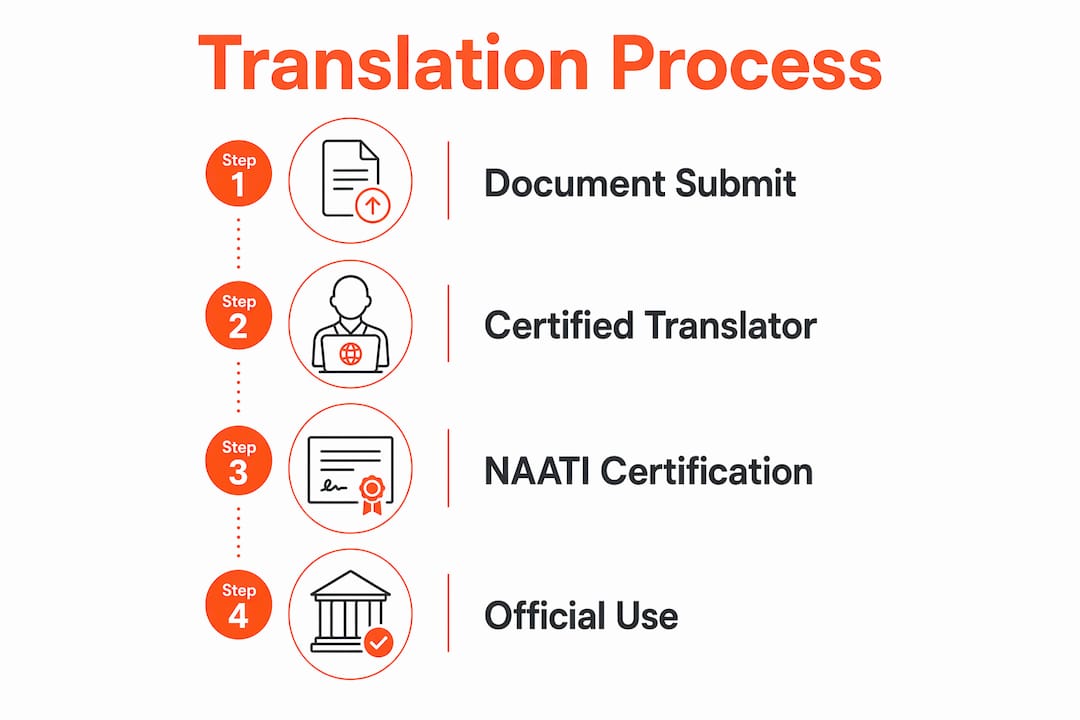
The Department of Home Affairs has a clear, non-negotiable position: any document submitted for a visa or immigration purpose that is not in English must be accompanied by an accurate NAATI-certified translation. Inside Australia, the translator must hold current NAATI credentials. Outside Australia, the translator must include their full name, address, and qualifications in English, printed directly on the translation itself.
This trips up a lot of applicants. A translation prepared overseas can still be accepted, but only when the translator’s credentials are clearly stated and verifiable. When a case officer cannot confirm who translated the document, the safer outcome is almost always a request for a fresh translation done locally by a NAATI-certified professional.
Legal proceedings add another layer. Tribunal matters, including hearings before the Administrative Appeals Tribunal, require full word-for-word translations rather than extract translations. Civil documents sometimes meet Home Affairs standards with extract translations covering key data fields, but anything with legal or evidentiary weight calls for the complete document. Confirm the specific requirement before submitting.
The consequences of getting this wrong go well beyond inconvenience:
- Visa applications can be delayed by weeks or months pending corrected translations
- Applications may be refused outright if non-compliant translations are lodged
- Uncertified translations often result in higher costs when applicants must pay for replacement translations under time pressure
- A missed visa allocation window can mean a partner stuck overseas for another quarter, or a second round of medical examinations
Understanding the immigration document translation process before you lodge saves both time and money.
Why translation quality matters as much as certification
Certification is the floor, not the ceiling. A NAATI-certified translator has passed rigorous competency testing that covers accuracy, professional standards, and the specific demands of legal and immigration document handling. That testing is what separates a certified translator from someone who simply speaks two languages fluently.
The errors that cause the most damage in credential translation are rarely obvious mistranslations. They are subtler: a name spelled differently across two documents in the same file, a stamp or seal left untranslated, a certification statement worded as a personal note rather than a formal declaration, or a practitioner number that does not appear on the NAATI register. Case officers notice all of these.
Layout fidelity matters too. When an officer places the source document and the translation side by side, headings, table rows, and signature blocks should sit in the same visual order. Page numbers should follow the original. Stamps and seals from the source document must be described in English, not left blank or marked as illegible without explanation.
The NAATI Online Directory allows instant verification of a translator’s certification status by searching their practitioner number. Anyone can print a convincing-looking stamp. Verification takes about a minute and confirms the name, language direction, and certification status match what appears on the translation. If the number returns nothing, the document is not worth lodging.
Where NAATI-certified translations are accepted across Australia
NAATI certification is not sector-specific. It is the standard across every major Australian institution that handles non-English documents, and the range of documents requiring certified translation is broader than most people expect.

Immigration and visa processing
The Department of Home Affairs accepts NAATI-certified translations for all visa categories, including partner, skilled, student, and visitor visas. Passport translations, police checks, and civil documents all fall under this requirement. Bilingual documents are not exempt. Home Affairs still requires the foreign-language portions of a bilingual police check to be translated.
Australian universities and education providers
Universities require certified translations of academic transcripts, degree certificates, and language proficiency results for both admission and credit transfer purposes. For a detailed breakdown of which institutions accept which formats, the Australian universities guide covers the 2026 requirements across major providers.
Courts and legal proceedings
Federal and state courts require certified translations for any non-English evidence, contracts, or identity documents. Tribunal matters, particularly those before the Administrative Appeals Tribunal, require full translations rather than extracts.
Professional registration boards
Bodies regulating medicine, nursing, pharmacy, engineering, and teaching all require NAATI-certified translations of overseas qualifications and registration certificates. The role of translation in professional registration is direct: without a compliant translation, the assessment process cannot proceed.
Healthcare settings
Medical records, referral letters, and clinical documents submitted to Australian health services require certified translations to protect patient safety and meet clinical governance standards. Certitranslate’s medical translation service handles these with the terminology accuracy that clinical settings demand.
Property transactions involving overseas parties also benefit from certified document translation. Conveyancing professionals working with international clients, such as those at Parramatta Conveyancing, regularly encounter the need for certified translations of identity documents and foreign title records.
What makes a NAATI-certified translation legally valid
A certified translation is not just a translated document with a signature on it. Every page must carry specific information, and missing even one element is enough for DFAT or Home Affairs to reject the submission.
DFAT’s requirements are explicit. A translation submitted to DFAT must include, on every translated page:
- The translator’s full name
- Their NAATI practitioner number
- The specific language pair (for example, Vietnamese into English)
- An accuracy declaration confirming the translation is a true and accurate rendering of the source
- The date of certification
- The translator’s signature (physical stamp) or “Digitally Authenticated by NAATI” (digital stamp)
- For digital stamps: the web address below the QR code must be clearly legible
Physical or digital stamping are both accepted, but the digital stamp must not be resized so small that the QR code or web address becomes unreadable. An original or copy of the original document, signed or stamped by the translator, must accompany the translated document.
The DFAT cutoff date is worth knowing: from 1 july 2018, DFAT only accepts translations completed by translators holding NAATI certification issued under the current Certification System. Translations completed under the former accreditation system are no longer accepted, regardless of how experienced the translator may be. Translations dated before 1 july 2018 are not affected.
NAATI credentials under the current system carry a three-year validity period and an expiry date. Translators must recertify to maintain their credential. This means you should confirm a translator’s certification is current, not just that they were certified at some point in the past.
Pro Tip: Before paying for any translation, search the translator’s practitioner number on the NAATI Online Directory. Confirm the name, language direction, and certification status all match what appears on the translation. This one step protects your application from a rejection that has nothing to do with the quality of the translation itself.
Common credentials that require certified translation for use in Australia include:
- Passports (biographical page and, for some visa categories, all visa stamps and endorsements)
- Birth and marriage certificates
- Academic transcripts and degree certificates
- Professional licences and registration certificates
- Police clearance certificates
- Legal contracts and court documents
- Medical records and clinical documentation
For a full breakdown of what counts as a certified translation and how the process works, Certitranslate’s guide covers the requirements in detail.
How Certitranslate makes NAATI-certified translation straightforward
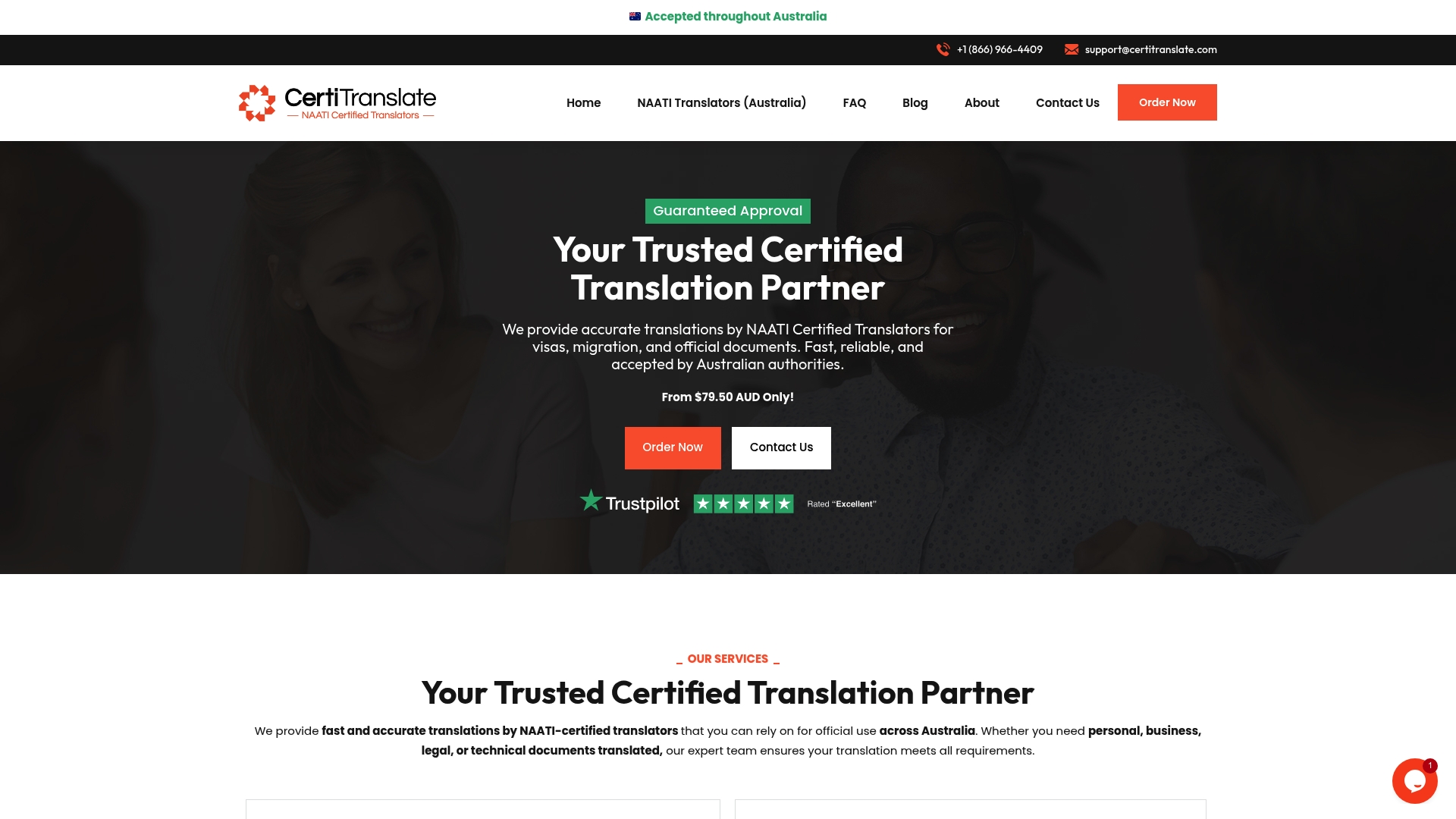
Certitranslate’s team of NAATI-certified translators handles credential translation for immigration, legal, professional registration, and business purposes across Australia. Every translation meets DFAT and Home Affairs standards, with the full set of mandatory elements on every page. Turnaround is fast, the process is clear, and the result is a document you can submit with confidence.
Whether you need a professional credential translated for a visa application, a university enrolment, or a registration board assessment, Certitranslate delivers translations that Australian institutions accept.
Key takeaways
NAATI-certified credential translation is the only translation format accepted by Australian government bodies, courts, universities, and professional registration boards, and non-compliant translations consistently cause delays, refusals, and added costs.
| Point | Details |
|---|---|
| NAATI certification is mandatory | Australian government agencies, DFAT, and Home Affairs require NAATI-certified translations for all non-English documents. |
| Every page must carry mandatory elements | Translator name, practitioner number, language pair, accuracy declaration, date, and stamp are required on every translated page. |
| DFAT cutoff applies from 2018 | Translations completed under the former accreditation system are not accepted by DFAT after 1 july 2018. |
| Verification protects your application | Searching the NAATI Online Directory confirms a translator’s current certification status before you lodge any document. |
| Document type determines translation scope | Civil documents may accept extract translations; legal and tribunal matters require full word-for-word translations. |
Recommended
- Why your professional licence needs certified translation – CertiTranslate – Translations by NAATI Certified Translators
- What is a translated professional membership certificate? – CertiTranslate – Translations by NAATI Certified Translators
- Certified Translations for Australia
- Why original documents accompany translations: 2026 guide – CertiTranslate – Translations by NAATI Certified Translators