


Most NAATI-certified translations in Australia run between $60 and $150 per page for standard personal documents, or $0.15 to $0.45 per word for longer, specialist material, according to market pricing data. That’s separate from NAATI’s own certification and administrative fees, which practitioners pay to maintain their credentials. Your final number depends on the language pair, document complexity, whether you need an extract or a full translation, and how fast you need it back.
TL;DR:
- The typical cost for NAATI-certified translations ranges from $60 to $150 per page or $0.15 to $0.45 per word, depending on document complexity.
- Rarer languages like Dinka or Tigrinya generally have higher prices and longer wait times due to fewer certified translators.
- Costs increase with document complexity, urgent turnaround, or extra services like certification formats and quality assurance.
- Requesting a clear, written total price before committing helps prevent unexpected bill increases, especially with complex formatting or dense content.
- Confirm whether authorities accept extract or full translations to avoid double fees or rejected documents.
Table of Contents
- How much does NAATI translation cost in Australia?
- Why quotes differ: the key cost drivers
- Estimated costs for common documents and visa bundles
- Extract vs full translation: which do you need?
- How to request a quote that won’t blow out later
- Why NAATI certification affects the price you pay
- Payment methods and fees to expect
- Budgeting rules that actually save you money
- Getting your documents translated the right way
- Sources
How much does NAATI translation cost in Australia?
Providers price certified translations three main ways: per page, per word, or as a flat per-document fee. Per-page pricing suits short official documents like birth certificates or driver’s licences, where length is predictable. Per-word pricing tends to apply to longer or more technical material, such as academic transcripts or contracts, where page count varies wildly and per-page quoting would be unfair to either side.
Standard personal documents usually sit between $60 and $150 per page, while specialist or lengthy work runs $0.15 to $0.45 per word. Most agencies also set a minimum fee per job, often equivalent to one page, because the certification and admin overhead doesn’t shrink just because your document is short.
Flat per-document pricing looks appealing until you check what’s excluded. Some online platforms advertise basic certified translations for $27 to $45 using a template or self-service model with a NAATI-certified reviewer signing off. That can work for a simple one-page certificate, but it often leaves out extras like formatting complex tables, verifying stamps, or same-day turnaround.
A few things shape the number you’ll actually pay:
- Whether you’re in a capital city or a regional area (prices tend to be fairly consistent nationally, since most work happens online)
- Whether the quoted price includes GST
- Whether you need a physical stamped certificate, a digital ID certification, or both
- How many pages or words your source document actually contains
Pro Tip: Ask for a total price in writing before you commit, not just a per-page or per-word rate. A “per page” quote can balloon if your document has dense formatting that spreads across extra pages.
Why quotes differ: the key cost drivers
Two providers quoting on the same document can land $80 apart, and it’s rarely random. Language pair availability is the biggest lever. NAATI certifies practitioners across dozens of language combinations, but common ones like Mandarin, Arabic, or Vietnamese have more competition and therefore steadier pricing. Rarer languages, think Dinka or Tigrinya, have fewer certified translators, so expect to pay more and wait longer.
Document complexity matters just as much as length. A one-page birth certificate with clean typed fields is quick to translate. A handwritten medical report full of tables, stamps, and marginal notes takes far longer, and poor scan quality or missing stamps forces translators to query you or research terminology, which adds cost and delay.
Other factors that move the price:
- The practitioner’s NAATI certification level and years of experience
- Turnaround time (rush jobs and after-hours requests typically attract a premium)
- Interpreter bookings, which usually carry minimum hourly or half-day charges regardless of how long you actually need someone
- Volume, since bulk document sets often qualify for a discounted per-page rate
Agencies with in-house quality assurance generally charge more than solo freelancers, but that extra layer catches errors before they reach a visa officer or court.
Estimated costs for common documents and visa bundles
Simple, single-page documents with standard formatting are the cheapest to translate. Anything with dense technical language, medical terminology, or legal clauses pushes into higher per-word territory because it demands more research and precision from the translator.
Visa application bundles multiply these figures. A student visa applicant translating a birth certificate and academic transcripts might spend $200 to $400 total. A partner visa case, which often includes birth certificates, police checks, and relationship evidence, can run $300 to $600. Skilled migration applicants with multiple qualifications and employment references sometimes exceed $500 once every supporting document is accounted for.

Ordering several documents together often earns a volume discount, since the provider only sets up the job once and can process multiple files in the same review cycle.
Extract vs full translation: which do you need?
An extract translation covers only the key fields, names, dates, and identifying numbers, rather than every line of a document. A full translation renders the entire document, including headers, footers, and boilerplate text. Extracts cost less because there’s simply less to translate.
Some receiving authorities accept extracts for straightforward documents like birth or marriage certificates, provided every required field is captured. Others insist on a full translation, particularly for legal or academic documents where omitted text could later be disputed.
Before ordering, confirm directly with the receiving authority which format they require. Getting this wrong means paying twice, once for the extract and again for the full version once it’s rejected.
How to request a quote that won’t blow out later
Getting comparable quotes means giving every provider the same information upfront.
- State the source and target language pair clearly, including any regional dialect.
- Specify the document type and whether you need an extract or full translation.
- Send clear scans or photos of the originals, not blurry phone snaps that hide stamps or handwriting.
- Ask whether the quoted price includes GST.
- Ask whether certification comes as a physical stamped copy, a digital ID, or both.
- Confirm whether quality assurance or a second reviewer is included, or if it’s a single translator’s work.
- Ask about the revision policy if the receiving authority requests changes.
Watch for quotes that seem unusually low. A price well under the typical $60 to $150 per page range often signals a template-based service without proper review, which can mean rejected paperwork later.
Pro Tip: If a provider quotes per word but won’t estimate your total word count upfront, ask them to run the numbers on your actual document before you agree to anything. A vague per-word rate is how quotes blow out.
Why NAATI certification affects the price you pay
NAATI certification isn’t a formality. It’s what makes a translation legally acceptable to Australian government departments, courts, and universities, and it comes with real practitioner accountability. That’s why certified work costs more than a bilingual friend doing you a favour: the translator’s name and credential are attached to the accuracy of every line.

Certitranslate’s translators hold NAATI certification and work across industry-specific terminology, from legal contracts to medical reports, so documents meet the standards Australian authorities expect. Turnaround times are typically fast, which matters when a visa deadline is looming and you can’t afford a rejected submission to cost you another two weeks.
Payment methods and fees to expect
Most Australian translation providers accept credit and debit cards, PayPal, and direct bank transfer, with online providers processing card payments instantly at checkout. Some larger agencies also accept BPAY for business clients paying via invoice, particularly for bulk corporate document sets.
Card payments through online platforms are usually the fastest way to lock in your booking, since the job doesn’t start until payment clears. Bank transfers can delay turnaround by a day or two while the provider waits for funds to land, so if you’re on a tight deadline, a card payment is the safer bet.
Watch for surcharges. Some providers add a small percentage fee for credit card payments, typically 1 to 2 percent, to cover merchant processing costs. This should be disclosed before you pay, not added silently at checkout. International clients paying from overseas should also check whether their card issuer applies a foreign transaction fee, since that’s outside the translation provider’s control.
If you’re paying for a large bundle of documents, ask whether the provider offers instalment options or requires full payment upfront. Most straightforward personal document jobs are paid in full before work begins, but bulk business or legal projects sometimes allow a deposit with the balance due on delivery.
Budgeting rules that actually save you money
Get three quotes before you commit to anything, not because the cheapest wins, but because the spread tells you what’s normal for your document. Always confirm whether you need an extract or a full translation before requesting a price. Then build in a time buffer. Rush fees for after-hours or same-day turnaround can add 30 to 50 percent to a job that would have been standard-priced a week earlier.
The most common mistake I see is applicants sending blurry scans and then getting hit with a higher quote once the translator has to chase up illegible stamps or missing pages. Send clean, complete originals from the start. A NAATI-certified translator who can read your document properly the first time is the cheapest translator you’ll ever hire.
— David
Getting your documents translated the right way
Certitranslate cuts out the guesswork that comes with comparing dozens of freelance quotes. Every translation is completed by a NAATI-certified translator, delivered with your choice of digital ID certification or a physical stamped copy, and handled by translators who know the difference between a birth certificate and a legal contract in terms of what regulators expect.
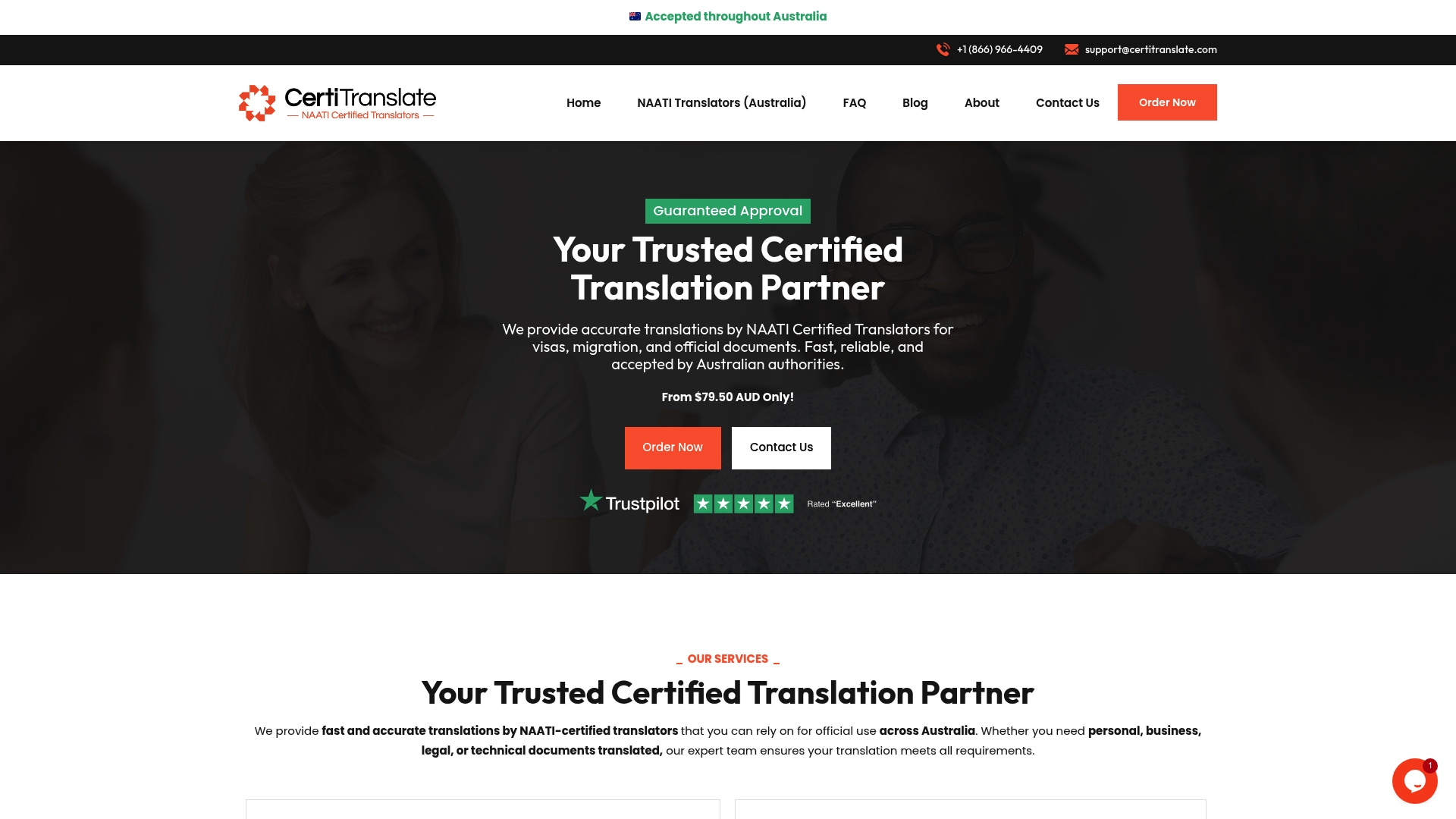
Turnaround options range from standard to rapid, so a looming visa deadline doesn’t have to mean paying rush fees to a provider you’ve never worked with before. You can request a quote by sending through your document type, language pair, and whether you need an extract or full translation, and get a clear price before committing. Before you order, it’s still worth checking with the receiving authority (a university, visa office, or court) exactly what certification format they require, since that one detail decides whether an extract will do or a full translation is non-negotiable. Once you know that, Certitranslate’s certified translation service can get your documents ready without the back-and-forth that usually eats up a week.
Sources
For the latest certification fees, see NAATI’s fees page and its directory guidance on translation pricing.
- Fees
- Understanding translation and interpreting costs – NAATI Online Directory
- How Much Does NAATI Translation Cost in Australia? – LEXIGO
Recommended
- NAATI Certified Translators | Fast & Accurate Services | CertiTranslate
- LP NAATI Translate – CertiTranslate – Translations by NAATI Certified Translators
- CertiTranslate – Translations by NAATI Certified Translators
- Languages most translated for Australian visas: 2026 guide – CertiTranslate – Translations by NAATI Certified Translators