

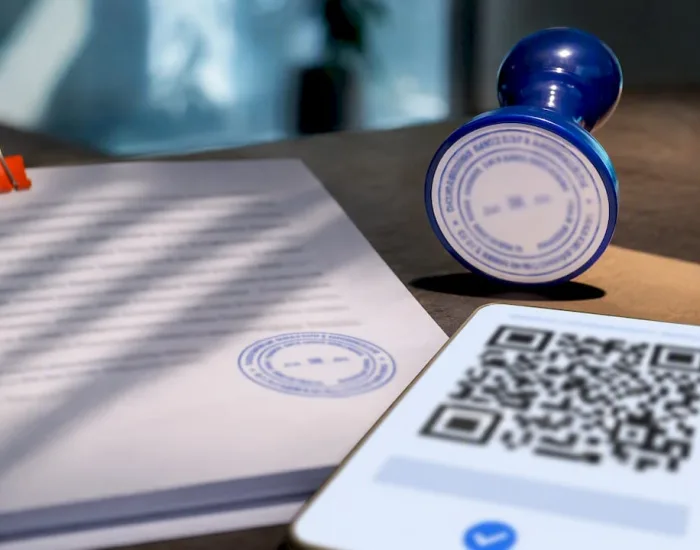
A genuine NAATI certified translation sample shows three things: the complete translated text, a signed or digitally authenticated NAATI stamp bearing the translator’s practitioner ID, and a clear reference to the original document. Australian authorities including DFAT, the Department of Home Affairs, and AHPRA check for exactly these elements before accepting any document. If a sample is missing one, it isn’t certified.
TL;DR:
- A genuine NAATI certified translation must include a complete translated text, a signed or digitally authenticated NAATI stamp with practitioner ID, and specific references to the original document.
- The stamp must display the translator’s name, practitioner ID, credential type, language pair, and certification date, with digital stamps now including a scannable QR code.
- Multi-page documents require stamps on each page, and a missing or illegible CPN, vague document description, or unscannable QR code are warning signs of a fake or shortcut translation.
- Verifying the CPN through the NAATI directory confirms the translator’s current credential status, and saving verification screenshots provides proof of due diligence.
- Different document types, such as birth certificates, transcripts, or police reports, have specific translation and stamping requirements, and requesting a full sample upfront ensures authenticity before payment.
Table of Contents
- What a real certified translation sample looks like on the page
- How to verify the stamp, CPN and digital-stamp QR code
- Sample breakdowns by document type
- How to request and verify a sample before you commit
- The gap between a “certified” translation and a notarised one
- CertiTranslate’s perspective on sample-ready translations
- Request a sample or start your certified translation with Certitranslate
- Sources
What a real certified translation sample looks like on the page
Open a genuine sample and the layout follows a predictable pattern. The translated text sits on the page first, formatted to mirror the original document’s structure, headings, tables, stamps and all. The translator’s declaration usually appears at the end of the final translated page, though some practitioners use a standalone declaration page when the source document runs long.

The wording itself is fairly standard across the industry. You’ll typically see something close to: “I certify that this is a true and accurate translation of the attached original document.” That line, or a close variant, sits above or beside the translator’s signature and stamp.
Every sample also needs to say something about the source document it was translated from. Most translators note whether they worked from the original, a certified copy, or a document merely sighted in person, because this affects how the receiving authority weighs the translation.
A few things to check on any sample you’re handed:
- The declaration references the specific document by name and date, not a generic template line.
- Every translated page carries a stamp or the translator’s initials, not just the final page.
- The original document type (birth certificate, transcript, and so on) is named explicitly, not left vague.
Multi-page documents get stamped page by page under DFAT’s guidance, which is one of the fastest ways to spot a shortcut job. A single stamp on the last page of a five-page transcript is a warning sign, not a formatting choice.
How to verify the stamp, CPN and digital-stamp QR code
A NAATI stamp has to carry specific information, and it’s worth knowing exactly what before you accept a sample as proof of anything. The stamp must show the translator’s name, their practitioner ID (the CPN), the credential type, the language direction, and the date of certification. NAATI issues physical stamps in blue ink, and since 2023 has also issued digital stamps carrying the phrase “Digitally Authenticated by NAATI” alongside a scannable QR code.
The CPN itself follows a recognisable format, something like CPN7MF89K, and it’s the single fastest way to confirm a translator is who they say they are. Punch that number into NAATI’s Verify a Credential tool and you’ll see whether the credential was current at the date the translation was signed, not just whether it’s current today.
Pro Tip: Save a screenshot of the verification result with the timestamp visible. Some receiving authorities want proof you checked, not just a claim that you did.
A handful of red flags show up again and again in samples that later get knocked back:
- A stamp with no CPN or an illegible one.
- A declaration that doesn’t name the specific document being certified.
- A QR code shrunk so small it won’t scan, something NAATI’s own stamp guidance explicitly warns against.
- No mention anywhere of whether the translator worked from the original or a copy.
NAATI oversees more than 15,000 credentials across 175-plus languages, and every one of them ties back to a checkable CPN. There’s no excuse for a sample to arrive without one.
Sample breakdowns by document type
Different documents carry different quirks, and a sample that looks fine for a birth certificate won’t necessarily tell you what to expect from a police report.
- Birth certificates usually get a full translation, not an extract, with the state registry’s seal and reference number carried across into the translated text.
- Marriage certificates follow the same full-translation rule, and repeat any marginal notes or amendments exactly as they appear on the original.
- Academic transcripts need every subject, grade and credit point listed in full. Universities often ask for a subject-by-subject match, so an abbreviated transcript translation is a common rejection point.
- Medical reports carry clinical terminology that has to match the source precisely. AHPRA in particular checks this closely when it’s assessing overseas-trained practitioners.
- Police reports need every charge, date and jurisdictional reference intact, since visa assessors cross-reference these against other application documents.
- Statutory declarations often need a notarised copy of the original attached, and the format requirements here trip up more applicants than any other document type.
Multi-page documents in every category get stamped on each page, not just the last one.
How to request and verify a sample before you commit
Getting a trustworthy sample before you pay for a full translation isn’t unreasonable. Any legitimate provider should hand over the translated pages, the stamp page, and a copy of how the original was referenced, without you having to ask twice.
Here’s the practical sequence:
- Ask the provider for a full sample, not just the declaration page in isolation.
- Note the CPN on the sample and run it through the NAATI directory yourself.
- Keep a screenshot or reference number from the verification check for your own records.
- Contact the receiving authority (DFAT, AHPRA, your university, or the relevant embassy) to confirm they don’t require extra wording, sealing, or apostille steps on top of the standard NAATI certification.
Pro Tip: If you’re submitting for a visa, check whether your specific visa subclass has its own documentation quirks before you finalise anything. This partner guide on English language test acceptance for Australian visas is a useful reminder that visa requirements shift by category, and translation acceptance often follows the same pattern.
The gap between a “certified” translation and a notarised one
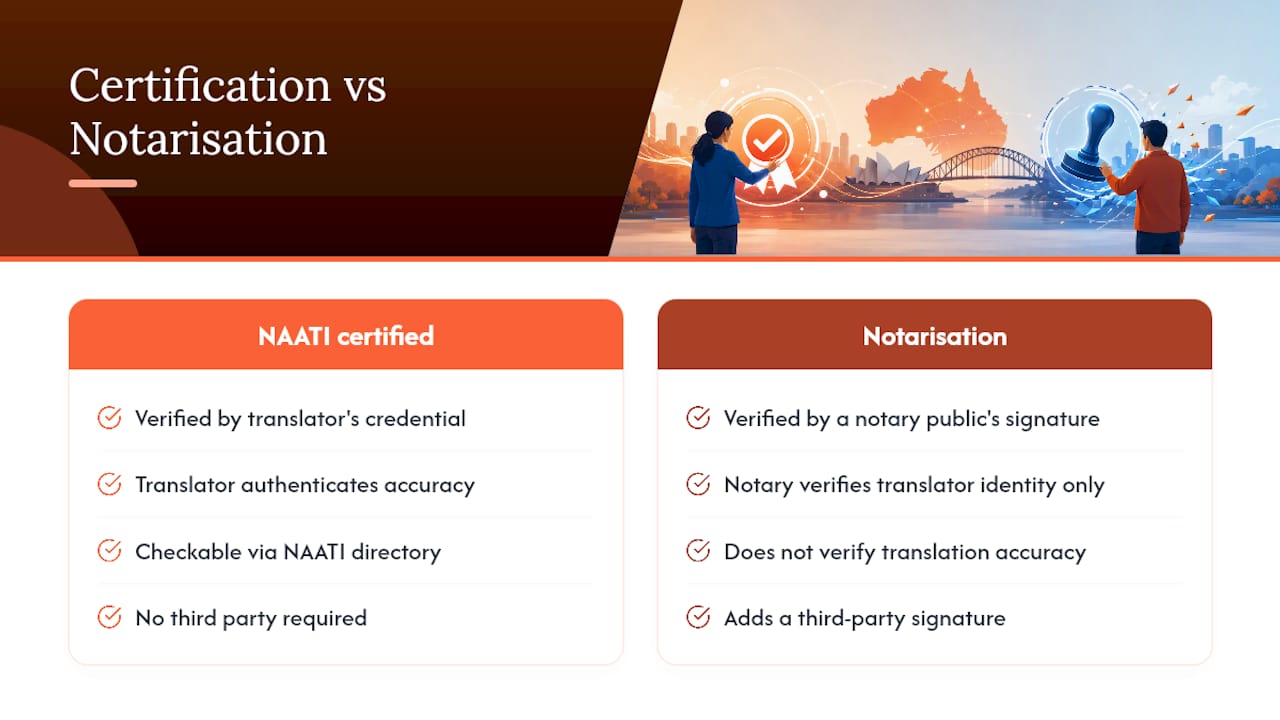
People conflate certification and notarisation constantly, and it costs them time. A NAATI certified translation is authenticated by the translator’s own credential, checkable through NAATI’s directory, with no third party required. A notarised translation adds a notary public’s signature on top, verifying the translator’s identity rather than the accuracy of the translation itself. For most Australian immigration and regulatory purposes, NAATI certification alone is what’s asked for. Where it’s not enough, and some overseas receiving bodies do ask for both, the notary step comes after the NAATI certification, never instead of it.
CertiTranslate’s perspective on sample-ready translations
Every translation Certitranslate produces goes out with a NAATI-certified stamp, physical or digital, applied to every page, not just the last one. Our quality process compares the finished translation against the original line by line before the declaration gets attached. Readers ask us for samples constantly, and we’d rather show the format upfront than have someone discover a gap after they’ve already paid a different provider and been rejected.
— David
Request a sample or start your certified translation with Certitranslate
Certitranslate gets you a stamped, CPN-verifiable translation without the guesswork of chasing a freelancer for proof of credentials. Ask us for a sample page matching your specific document type, birth certificate, transcript, police report, whatever you’re dealing with, and we’ll send you stamped pages plus the CPN so you can check it against the NAATI directory yourself before you commit to anything.
Our translators are NAATI-certified across more than 120 languages, and most standard documents turn around fast enough to meet visa or university deadlines without last-minute panic. If you’re weighing up which credential level or language pairing you actually need, our guide on choosing the right NAATI-certified translator walks through the practical criteria. When you’re ready, get a quote through our certified translations page for Australia or read the full breakdown of what certified translation actually covers before you upload your documents.