


Certified translation turnaround for applications is defined as the time between submitting your documents to a NAATI-certified translator and receiving a completed, officially certified translation ready for submission. For most standard applications, that window runs 3–5 business days. Express options compress delivery to 24–48 hours, and same-day services exist for genuine emergencies. In Australia, NAATI certification is the only officially recognised standard for translators working on visa, immigration, education, and legal documents. Getting the timing wrong can cost you an application.
1. What factors influence certified translation turnaround times?
Turnaround time is not a fixed number. Document length, language pair, complexity, and provider translator panel size all affect how quickly a certified translation reaches you. A single-page birth certificate translates faster than a 40-page legal contract with technical terminology.

Language pair availability matters more than most people realise. Common pairs like Chinese to English or Arabic to English have large translator pools, which means faster scheduling. Rare language pairs, such as Tigrinya or Dzongkha, may require longer lead times simply because fewer NAATI-certified translators hold credentials in those languages.
Certification type also affects speed. Some documents require additional verification steps beyond the standard NAATI certification statement. The Department of Home Affairs, for example, may require specific formatting or additional declarations for certain visa categories. Those extra steps add time.
- Document length: Longer documents take more time to translate accurately.
- Language pair: Common pairs are faster; rare pairs need more scheduling lead time.
- Complexity: Legal, medical, and technical documents require specialist translators.
- Provider capacity: Larger translator panels handle urgent requests more reliably.
- Verification requirements: Some agencies require additional declarations or formatting.
Pro Tip: Always ask your translation provider how many NAATI-certified translators they have available for your specific language pair before committing to a turnaround time.
2. Top 5 turnaround options for certified translations in Australia
Understanding your options helps you match urgency to cost. Standard turnaround runs 3–5 business days, with express delivery available in 24 hours. Each tier suits different situations.
Standard turnaround: 3–5 business days
Standard delivery is the default for most certified translation requests. It suits applications with non-urgent deadlines, such as university enrolments, employment visa applications lodged well in advance, or legal agreements with flexible timelines. Documents covered include birth certificates, marriage certificates, academic transcripts, and police clearances.
Express turnaround: 24–48 hours
Express and same-day certified translation services are available for urgent requirements but subject to availability and additional fees. Express delivery suits applicants who have received a short-notice request from the Department of Home Affairs or a university admissions office. Expect a price premium over standard rates.
Urgent or same-day turnaround
Same-day delivery is the fastest option and carries the highest cost. Availability depends entirely on the provider’s current workload and whether a qualified translator for your language pair is free. This tier suits genuine emergencies: a visa interview scheduled for the next morning, or a court appearance requiring translated evidence by close of business.
What each tier typically covers
- Standard (3–5 business days): Birth certificates, marriage certificates, academic transcripts, police clearances, and most single-page identity documents.
- Express (24–48 hours): Passports, driver licences, short contracts, and single-page statutory declarations.
- Same-day (subject to availability): Short documents only, typically under five pages, for common language pairs.
Pro Tip: If your application has a hard deadline, book express or same-day translation at least 48 hours before you actually need the document. Providers need time to confirm translator availability.
3. How to verify your translator’s NAATI certification and why it matters
NAATI certification is not a one-time credential. NAATI credentials require renewal every three years, and government agencies verify translator credentials at the time of application submission. An expired credential is treated the same as no credential at all.
The NAATI online directory is the definitive source for checking a translator’s current status. You search by name or NAATI number and confirm that the credential is active, not lapsed. This check takes under two minutes and can save your application from rejection.
Submitting translations by expired certified translators leads to delays or outright rejection. That means restarting the translation process, paying again, and potentially missing your application window. The cost of skipping a credential check is far higher than the check itself.
- Check the NAATI online directory before engaging any translator.
- Confirm the credential is current, not just that the translator holds a NAATI number.
- Ask the provider to include the translator’s NAATI number on the certified translation document.
- Verify that the language pair on the credential matches your document’s source language.
Certified translations must include a full certification statement, NAATI number, and translator signature to be accepted by Australian government agencies. A translation missing any of these elements will be rejected regardless of quality.
Pro Tip: When you receive your completed translation, check for the NAATI number, certification statement, and signature before submitting. A two-minute check prevents a two-week delay.
For academic submissions specifically, the role of accredited translators in ensuring document acceptance is well documented. Universities apply the same verification standards as immigration agencies.
4. Common challenges that delay certified translation delivery
Most delays in certified translation delivery are avoidable. Failure to submit originals alongside translations or incomplete documents causes rejections and forces applicants to restart the process entirely. Knowing the common pitfalls puts you ahead of the majority of applicants.
- Incomplete document submission: Sending a scan of poor quality or a partial document forces the translator to request the original, adding days to the timeline.
- Missing original documents: Many agencies require the original document to accompany the certified translation. Submitting the translation alone is grounds for rejection.
- Missing certification elements: A translation without the NAATI number, certification statement, or signature is not a certified translation, regardless of accuracy.
- Format mismatches: Some agencies require specific page layouts or declaration wording. Confirm requirements before ordering.
- Last-minute requests: Ordering a translation the day before a deadline leaves no room for corrections or resubmission if an error is found.
“The single most common reason a certified translation fails to meet an application deadline is not translation quality. It is incomplete paperwork submitted too late to fix. Plan for at least one round of review before your actual deadline.”
Timing is the factor most applicants underestimate. Selecting verified NAATI-certified translators and submitting early is the most reliable way to avoid delays. Build at least two business days of buffer between receiving your translation and your application deadline. That buffer covers minor corrections, format adjustments, and courier time if physical documents are required.
For a full breakdown of what documents you need to prepare, the guide on visa application documents covers each category in detail.
5. NAATI LSP Endorsement and what it means for turnaround reliability in 2026
NAATI launched its LSP Endorsement programme in 2026, creating an organisation-level credential that aligns language service providers with the same standards applied to individual certified translators. This matters for turnaround reliability because it means providers carrying the endorsement have demonstrated consistent quality processes, not just individual translator credentials.
For applicants, this development adds a practical screening tool. An endorsed provider has been assessed against NAATI’s quality framework at the business level. That reduces the risk of receiving a translation that fails on a technicality, which is the most common cause of unexpected delays.
The endorsement does not replace individual NAATI certification. Every translation still requires a NAATI-certified translator to sign and certify the document. The LSP Endorsement adds an extra layer of accountability at the provider level, which benefits applicants who need consistent, reliable delivery across multiple documents or ongoing translation needs.
Key takeaways
Certified translation turnaround for applications depends on document complexity, language pair, and the urgency tier you select, with standard delivery at 3–5 business days and express options available in 24–48 hours.
| Point | Details |
|---|---|
| Standard turnaround | Most certified translations for applications are delivered in 3–5 business days. |
| Express and same-day options | Express delivery takes 24–48 hours; same-day is subject to availability and higher cost. |
| NAATI credential validity | Translators must hold a current NAATI credential, renewed every three years, or submissions face rejection. |
| Mandatory certification elements | Every certified translation must include the NAATI number, certification statement, and translator signature. |
| Early submission prevents delays | Building a two-business-day buffer before your deadline protects against corrections and resubmission. |
Why I think most people plan their translation timeline backwards
Most applicants I have spoken with treat certified translation as the last step before lodging an application. They finalise every other document, then scramble for a translation at the end. That approach is backwards, and it costs people real money in express fees and missed deadlines.
The translation is not a formality. For immigration applications, it is often the document that triggers the most scrutiny. The Department of Home Affairs checks NAATI credentials, certification statements, and formatting. A single missing element sends the whole application back. I have seen applicants pay three times the standard rate for same-day delivery because they left it too late, only to have the translation rejected anyway due to a formatting issue that a standard-turnaround provider would have caught.
My honest advice: treat the translation timeline as the anchor point for your application, not an afterthought. Book your translation the moment you know your application deadline. Use a provider with a verified NAATI translator panel and a clear quality check process. The 2026 NAATI LSP Endorsement gives you a concrete way to screen providers beyond just asking if their translators are certified.
Balancing cost and urgency is straightforward once you plan ahead. Standard turnaround is almost always sufficient if you start early. Express fees are a tax on poor planning, not a feature you should need regularly. The applicants who consistently hit their deadlines without stress are the ones who book their translations first, not last.
— David
Certitranslate: fast, NAATI-certified translations for your applications
Certitranslate works with a network of NAATI-certified translators across Australia, covering a wide range of language pairs for immigration, legal, academic, and business documents.
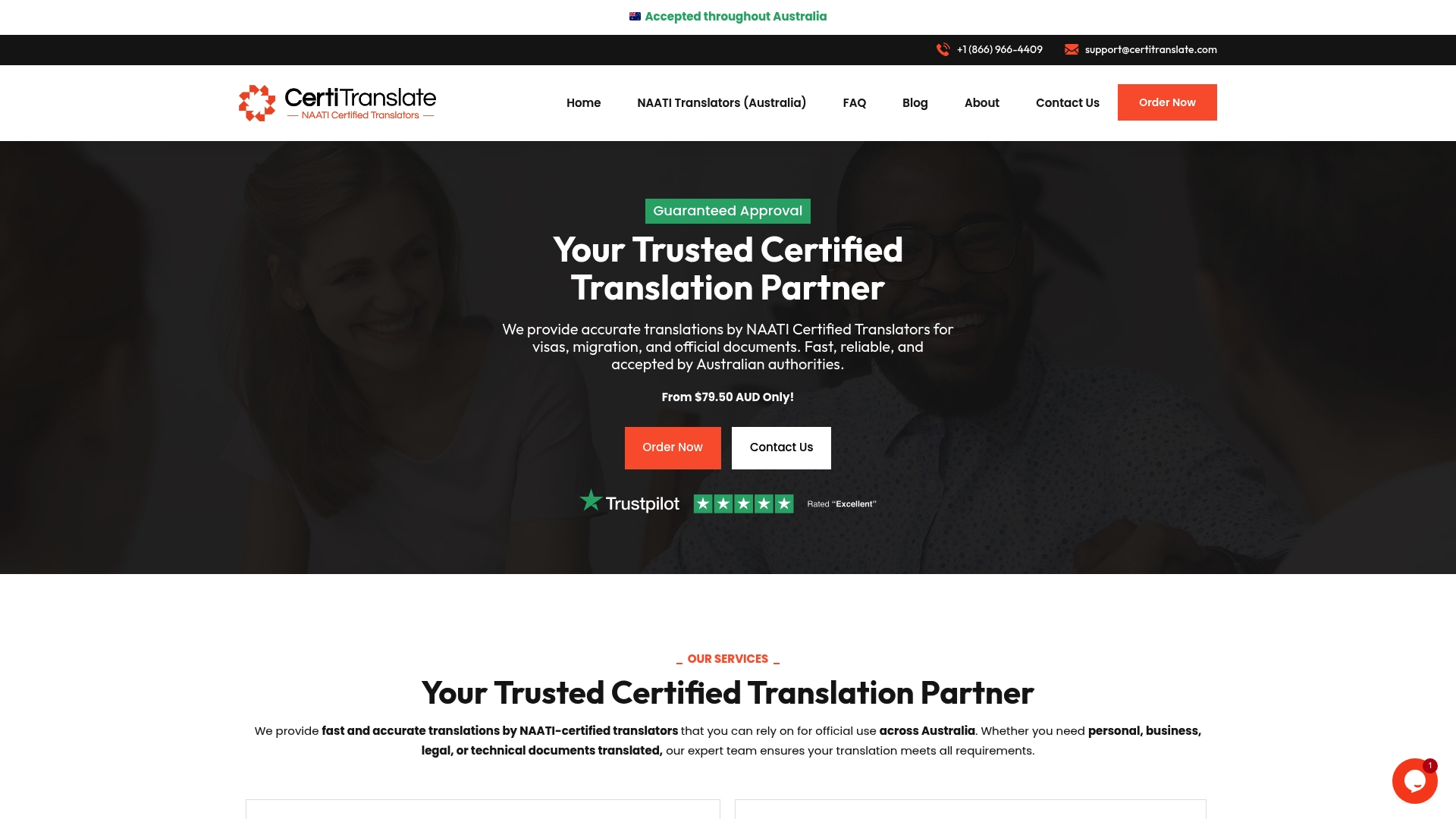
Standard and express turnaround options are available, with every translation including the mandatory NAATI number, certification statement, and translator signature required by Australian government agencies. Certitranslate’s quality process checks each document before delivery, reducing the risk of rejection due to missing elements. Whether you need a certified translation for a visa application or a legal agreement, Certitranslate delivers translations that meet official requirements. Visit Certitranslate’s NAATI translator services to request a quote or check turnaround availability for your language pair.
Preguntas frecuentes
What is the standard certified translation turnaround time?
Standard certified translation turnaround runs 3–5 business days for most document types. Express delivery is available in 24–48 hours for urgent applications.
Does Australia require NAATI certification for official translations?
NAATI certification is the only officially recognised standard in Australia for translations submitted to government agencies, universities, and courts. Non-NAATI translations are rejected.
What happens if a translator’s NAATI credential has expired?
An expired NAATI credential means the translation will not be accepted by Australian agencies. Applicants must resubmit with a translation from a currently certified translator.
How do I check if my translator is NAATI certified?
Search the NAATI online directory by the translator’s name or NAATI number. Confirm the credential is active and covers the correct language pair before proceeding.
Can I get a same-day certified translation in Australia?
Same-day certified translation is available from some providers but is subject to translator availability and carries additional fees. It is generally limited to short documents in common language pairs.
Recommended
- Certified translation for import/export agreements: 2026 guide – CertiTranslate – Translations by NAATI Certified Translators
- Immigration document translation process: a complete guide – CertiTranslate – Translations by NAATI Certified Translators
- Why original documents accompany translations: 2026 guide – CertiTranslate – Translations by NAATI Certified Translators
- Translate birth certificate for immigration: 2026 guide – CertiTranslate – Translations by NAATI Certified Translators