


Certified translation of a will or testament is defined as a qualified translator’s signed declaration that their rendering of the original document is accurate and faithful, word for word. Courts and probate registries rely on this declaration to assess a foreign-language will without needing fluency in the source language. In Australia, that accreditation standard is set by NAATI (the National Accreditation Authority for Translators and Interpreters), which certifies translators to the level required for legal document translation. Getting this right matters enormously. A single linguistic error can invalidate a clause, trigger a dispute between beneficiaries, or stall probate for months. This translate will testament certified guide walks you through every step, from preparation to court submission.
What do you need before commissioning a certified will translation?
Preparation is the step most families skip, and it is the most common reason translations get rejected. Receiving authority requirements vary widely across jurisdictions. Before you contact any translator, you need to know exactly what the destination court or probate registry requires.

Documents to gather first
Collect every document that forms part of the estate record before you begin. Missing a codicil or annexe at this stage means the translation will be incomplete and likely rejected.
- The original will, signed and dated
- All codicils (amendments to the will)
- Any annexes, schedules, or attachments referenced in the will
- Authentication stamps or apostilles already obtained
- Death certificate, if probate has already commenced
- Any prior certified translations if the will has been partially translated
Certification levels you need to understand
Three certification levels exist, and choosing the wrong one is a costly mistake. A standard certified translation carries a signed statement of accuracy from the translator. A notarised translation adds a notary’s verification of the translator’s identity and signature. A sworn translation requires the translator to take a legal oath before a court or authorised officer, and certain jurisdictions, particularly in Europe and Latin America, require this level for full legal validity.
Not all certified translations carry equal legal weight. Confirm with the receiving court which level applies before you commission the work.
Pro Tip: Call the probate registry or court directly and ask for their written requirements. A two-minute phone call saves weeks of delays.
How do you choose the right certified translator for a will?
The translator you choose determines whether the document is accepted or rejected. Courts rely on translator accreditation as the basis for trusting the translation. In Australia, that means selecting a NAATI-certified translator with demonstrated experience in legal and succession terminology.
Credentials to look for
- NAATI certification at the Professional Translator level or above
- Demonstrated experience with wills, probate documents, and succession law terminology
- Familiarity with both the source and target jurisdiction’s legal frameworks
- A clear confidentiality policy covering sensitive estate documents
- Willingness to provide a signed certificate of accuracy with the completed translation
Pitfalls that will cost you
Using a bilingual friend or family member is not an option. Institutions require accredited translators meeting ISO 17100 standards, and self-translated or unqualified documents are rejected outright. The delay this causes in probate can freeze estate assets for months, which directly harms beneficiaries.
Legal intent in wills is fragile. A translator must understand succession law in both the source and target language to maintain the enforceability of each clause. Translating “residuary estate” incorrectly, for example, can alter who receives what. That is not a linguistic problem. It is a legal one.
Pro Tip: Ask any prospective translator for a sample of a previously translated legal document (redacted for privacy). Their handling of technical terminology tells you more than any credential list.
For a thorough breakdown of how to assess your options, Certitranslate’s guide on choosing the right translator covers the key criteria in plain language.
What is the step-by-step process for certified will translation?
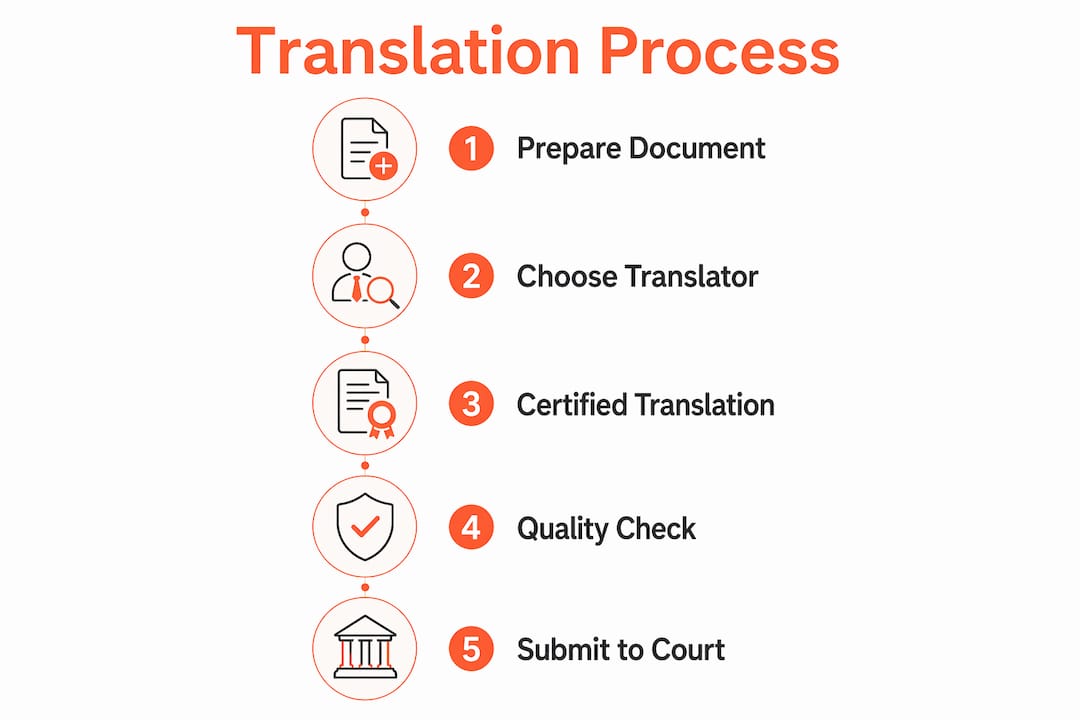
The process follows four clear stages. Checking requirements, engaging an accredited translator, obtaining certification, and providing originals for review covers the core workflow. Each stage has specific actions that determine whether the final document holds up in court.
The four-stage workflow
- Submit all documents. Provide the original will, all codicils, annexes, and any authentication stamps to your chosen NAATI-certified translator. Digital scans are accepted by most services, but some courts require certified copies of originals.
- Translation and review. The translator renders the full document into the target language, preserving formatting, numbering, and clause structure. They then review the draft against the original for accuracy.
- Certification statement. The translator signs a certificate of accuracy attesting that the translation is complete and faithful to the original. This is the document courts rely on.
- Notarisation or sworn declaration (if required). If the receiving authority requires a notarised or sworn translation, this step is completed before delivery.
Turnaround times and delivery
| Stage | Typical timeframe |
|---|---|
| Standard single document | 24–48 hours |
| Complex multi-page will with codicils | 3–5 business days |
| Expedited service | Same day or next day |
| Notarisation added | Add 1–2 business days |
Standard turnaround for certified legal documents is 24–48 hours with digital delivery. That timeline means urgent probate matters can be addressed quickly, provided all source documents are submitted in full at the outset.
Once the certified translation is delivered, the executor submits it alongside the original will to the probate court. The court uses the translation to assess the will’s validity and intent without requiring its own interpreter.
What are the most common errors in will translation and certification?
Most translation failures are avoidable. They stem from poor preparation, wrong certification level, or unqualified translators rather than from the complexity of the document itself.
- Mistranslation of legal terms. Words like “executor,” “bequest,” “intestate,” and “residuary estate” have precise legal meanings. A loose translation changes the legal effect of a clause.
- Wrong certification level. Submitting a standard certified translation when the court requires a sworn translation results in automatic rejection.
- Ignoring receiving authority rules. Jurisdictions differ significantly on which documents are required and in what form. Translating only the main will when codicils are also required leaves the translation incomplete.
- Using unaccredited translators. Unqualified or self-translated documents are rejected by courts, causing procedural delays or invalidation of the submission.
- Omitting formatting details. Courts expect the translation to mirror the original’s structure, including clause numbers, headings, and signature blocks.
Certified translation enables judicial assessment of a foreign-language will, but it does not grant legal validity to the underlying document itself. A perfectly translated will that was improperly executed in the source jurisdiction remains invalid regardless of translation quality.
The most damaging error is not checking the receiving authority’s specific requirements before commissioning the work. That single oversight is the leading cause of rejected translations and probate delays. Understanding why legal terminology requires a specialist helps families avoid this trap before it costs them time and money.
Key takeaways
Certified will translation requires NAATI-accredited expertise, the correct certification level for the receiving jurisdiction, and complete documentation submitted from the outset.
| Point | Details |
|---|---|
| Certification level matters | Confirm whether the court requires standard certified, notarised, or sworn translation before commissioning. |
| NAATI accreditation is non-negotiable | In Australia, only NAATI-certified translators produce translations accepted by courts and probate registries. |
| Preparation prevents rejection | Gather the original will, all codicils, annexes, and authentication stamps before engaging a translator. |
| Turnaround is fast when prepared | Standard certified translations are delivered in 24–48 hours; expedited options exist for urgent probate matters. |
| Errors carry legal consequences | A single mistranslated legal term can invalidate a clause or trigger beneficiary disputes. |
What I have learned from cross-border estate translations
Working with families navigating cross-border estate matters has taught me one consistent lesson: the legal complexity is rarely the problem. The problem is almost always administrative. Families arrive with a will that was properly executed in Italy, Greece, or Vietnam, and they assume the hard part is the translation itself. It is not. The hard part is knowing exactly what the Australian probate registry or the foreign court needs before a single word is translated.
The distinction between a notarised and a sworn translation trips up even experienced executors. I have seen probate delayed by three months because a family submitted a certified translation to a Spanish court that required a sworn declaration. The translation was accurate. The certification level was wrong. That is a fixable problem, but only if you ask the right questions before you start.
My practical advice is this: treat the receiving authority as your primary client, not the deceased’s estate. Find out what that court or registry needs in writing. Then engage a NAATI-certified translator with specific experience in succession documents, not just general legal translation. The difference in terminology knowledge between a generalist and a specialist is significant, and courts notice it.
The families who get this right are the ones who slow down at the preparation stage. They gather every document, confirm every requirement, and choose a translator based on demonstrated legal expertise rather than price alone. That approach protects the legacy the testator worked to leave behind.
— David
Certitranslate: NAATI-certified will translations for Australian courts
Certitranslate provides NAATI-certified legal translations for wills, testaments, and estate documents accepted by Australian probate courts and international registries. Every translation is completed by a NAATI-accredited translator with experience in succession and estate terminology, and each comes with a signed certificate of accuracy.
CertiTranslate offers delivery options from 12 hours for urgent probate matters, subject to document length and translator availability. If you need to understand the full scope of what certified translation involves before you start, Certitranslate’s complete certified translation guide covers accreditation standards, certification levels, and legal acceptance in plain language. Request a quote directly through the website and receive a clear price with no hidden costs.
Preguntas frecuentes
What is a certified translation of a will?
A certified translation is a signed declaration by a qualified translator confirming the translation is accurate and faithful to the original. Courts use this declaration to assess a foreign-language will without requiring their own interpreter.
Does Australia require NAATI-certified translators for will translations?
Yes. Australian courts and probate registries require translations produced by NAATI-certified translators. Translations from unaccredited individuals are not accepted and cause procedural delays.
What is the difference between a notarised and a sworn translation?
A notarised translation includes a notary’s verification of the translator’s identity and signature. A sworn translation requires the translator to take a legal oath before an authorised officer, and is mandatory in certain jurisdictions for full legal validity.
How long does certified will translation take?
Standard turnaround is 24–48 hours for a single document with digital delivery. Complex wills with multiple codicils or annexes typically take 3–5 business days.
Can I translate a will myself or use a bilingual family member?
No. Courts reject self-translated or unqualified translations outright. ISO 17100 standards require accredited translators, and using an unqualified person causes delays and can invalidate the submission entirely.
Recommended
- Certified guardianship document translation: a complete guide – CertiTranslate – Translations by NAATI Certified Translators
- Certified translation of a power of attorney: 2026 guide – CertiTranslate – Translations by NAATI Certified Translators
- Certified translation for import/export agreements: 2026 guide – CertiTranslate – Translations by NAATI Certified Translators
- What is certified translation: a complete guide – CertiTranslate – Translations by NAATI Certified Translators