


A police clearance certificate is an official government document that confirms whether a person has a criminal record. Certified translation is the professionally accredited process that converts this document into another language while guaranteeing its legal validity for immigration and official submissions. Understanding why police clearance needs certified translation is not optional knowledge for visa applicants or legal petitioners. Authorities including USCIS, IRCC, and Australia’s Department of Home Affairs reject any translation that lacks formal accreditation. Getting this wrong costs you time, money, and in some cases, your entire application.
Why police clearance needs certified translation for immigration
Certified translation is the only form of translation that immigration authorities legally recognise for police clearance certificates. Bodies like USCIS and IRCC do not accept translations completed by family members, bilingual friends, or unaccredited agencies. Non-certified translations result in application delays, rejections, or outright denials, even when the original document is entirely correct. The translation must carry a certification statement, an official stamp or seal, and the accredited translator’s signature to be accepted.
The stakes are especially high with police clearance documents because they contain sensitive legal findings. A single mistranslated word in a charge description or a missing reference number can trigger a cross-check against law enforcement databases. Discrepancies in minor details can cause immediate denial by immigration authorities. Certified translation removes that risk by placing legal accountability on a qualified professional.

In Australia, the recognised accreditation body for translators is NAATI (National Accreditation Authority for Translators and Interpreters). traductores certificados por NAATI provide the professional standard that Australian immigration authorities and courts require. No other credential substitutes for NAATI accreditation when submitting documents to Australian government bodies.
What is a certified translation and how does it differ from a regular one?
A certified translation is produced by an accredited professional who attaches a signed statement confirming the translation is complete and accurate. A regular translation carries no such guarantee and has no legal standing with government bodies.
The key differences come down to accountability and traceability. Certified translations provide accountability that a plain translation cannot deliver, which reassures immigration and legal authorities of document authenticity. This accountability also reduces the risk of fraud. A regular translation from a bilingual colleague may be perfectly accurate in meaning, but it offers no legal recourse if an authority disputes its content.
Certified translations also follow a strict format. They include:
- The full translated text of the original document, without omissions
- A certification statement declaring the translation is accurate and complete
- The translator’s full name, accreditation number, and contact details
- An official stamp or seal from the accrediting body
- The date the translation was completed
Pro Tip: Always ask your translation provider to confirm their NAATI accreditation number before you place an order. You can verify any NAATI credential directly on the NAATI website.
Authorities like USCIS cross-verify translation accuracy against original records. Any formatting shortcut or missing element gives them grounds to reject the submission immediately.
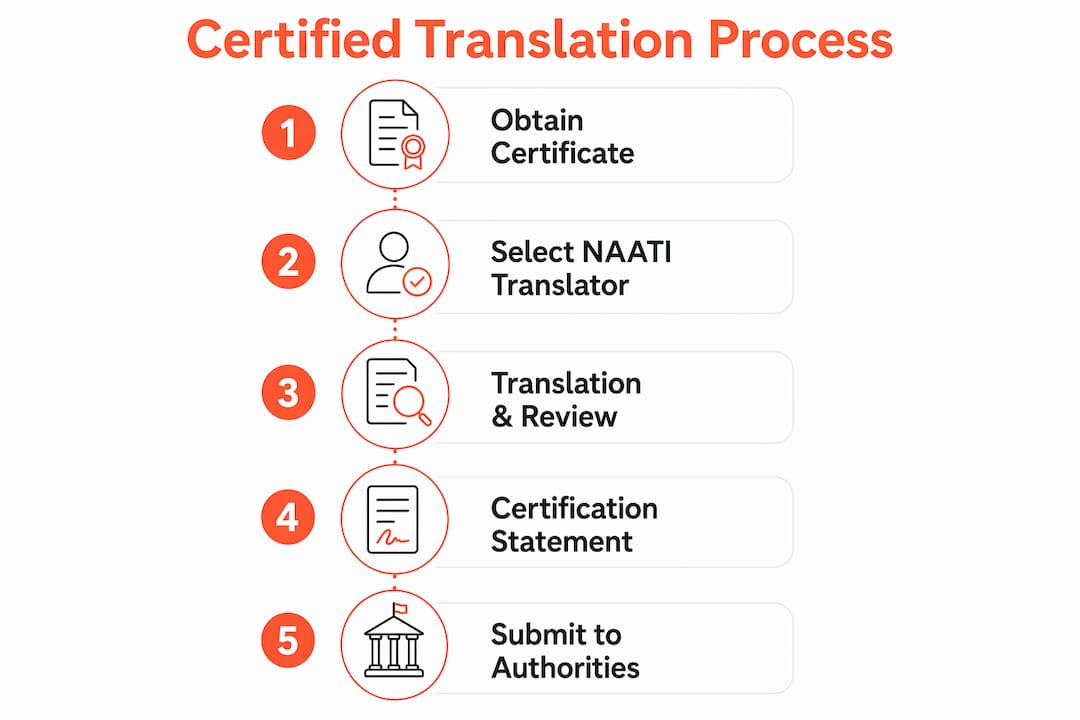
Why are police clearance certificates specifically high-risk documents?
Police clearance certificates carry legal findings about a person’s criminal history. That makes them among the most scrutinised documents in any immigration or legal application.
- Legal precision is non-negotiable. A charge described as “assault” versus “aggravated assault” produces entirely different legal outcomes. Certified translators understand legal terminology in both the source and target language.
- Authorities cross-reference the translation. USCIS and equivalent bodies compare the translated text against original records and law enforcement databases. Any inconsistency flags the application for review or denial.
- Accountability sits with the translator. When a certified translator signs and stamps a translation, they accept professional and legal responsibility for its accuracy. That traceability is what makes the document trustworthy.
- International standards require it. Canada’s immigration authority requires police certificates to be translated into English or French by a certified translator. Most comparable jurisdictions apply the same rule.
- Errors carry consequences beyond rejection. Submitting a fraudulent or inaccurate translation of a criminal record can result in a permanent ban from re-applying in some jurisdictions.
“Certified criminal record translations are legally required by USCIS and other authorities to accompany police clearance certificates, ensuring fidelity and acceptance at first submission.” — USCIS certified criminal record translation services
The importance of certified translation for police clearance documents goes beyond compliance. It protects the applicant from errors that could follow them through years of legal proceedings.
What must a certified translation of a police clearance include?
Every element of the original document must appear in the translation. Missing or altered content gives authorities grounds to reject the submission.
| Element | Why it must be included |
|---|---|
| Subject’s full name and date of birth | Confirms the certificate belongs to the applicant |
| Issuing authority name and details | Verifies the document’s official origin |
| Official seals, stamps, and reference numbers | Authenticates the document against government records |
| Finding statement (clear or with record) | States the legal outcome the authority needs to assess |
| Criminal history details, if present | Includes exact charges, dates, and outcomes |
| Issue date and validity period | Confirms the certificate is current and not expired |
| Translator’s certification statement | Provides legal accountability for the translation |
The translation must capture every detail of the original certificate, including issuing authority, subject’s full name and date of birth, finding statements, criminal history if any, official seals, stamps, reference numbers, and issue date, to meet 2026 standards.
Pro Tip: Police clearance certificates typically expire after a limited validity period. In many jurisdictions this is 90 days. Order your certified translation promptly after receiving the original document to avoid needing to reapply.
Incomplete or outdated translations cause immigration authorities to reject or require resubmission of documents. Timing matters as much as accuracy.
How to get a certified translation for your police clearance certificate
The process for obtaining a certified translation is straightforward when you follow the right steps. Cutting corners at any stage creates problems at submission.
- Locate an accredited translator. In Australia, search for NAATI-certified services that specialise in legal document translation. Accreditation is non-negotiable.
- Submit a clear copy of the original. Provide a high-resolution scan or photograph of the police clearance certificate. Blurry or incomplete images delay the process and increase the chance of errors.
- Confirm the certification format. Ask the provider to confirm their translation will include a signed certification statement, accreditation number, and official stamp. Review a sample format before committing.
- Check the target authority’s requirements. USCIS, IRCC, and Australian immigration each have specific formatting expectations. Confirm which authority will receive the document and whether they have additional requirements.
- Review the completed translation. Before submission, compare the translated document against the original. Verify that all names, dates, reference numbers, and the finding statement are present and accurate.
- Submit within the certificate’s validity window. Most police clearance certificates expire within 90 days of issue. Submit your application before this window closes to avoid reapplying for a new certificate.
- Keep certified copies. Retain at least two certified copies of the translated document. Some authorities require multiple copies, and having spares prevents delays if one is lost.
Avoiding common submission mistakes is as important as getting the translation right. Many applications fail not because of the translation itself, but because of how the document is presented to the authority.
Certified translations completed by NAATI-accredited professionals are accepted by Australian immigration authorities, courts, and government departments without question. The same standard applies when submitting to US immigration authorities.
Key takeaways
Certified translation of a police clearance certificate is a legal requirement, not a formality, and submitting an uncertified translation to USCIS, IRCC, or Australian immigration will result in rejection regardless of the document’s accuracy.
| Point | Details |
|---|---|
| Certification is legally required | USCIS, IRCC, and Australian authorities reject non-certified translations outright. |
| NAATI accreditation is the Australian standard | Only NAATI-certified translators meet the requirements for Australian immigration and legal submissions. |
| Every document element must be translated | Names, dates, seals, reference numbers, and finding statements must all appear in the certified translation. |
| Validity windows are strict | Most police clearance certificates expire within 90 days, so translations must be ordered and submitted promptly. |
| Errors trigger immediate denial | Discrepancies between the translation and original records cause authorities to deny applications on the spot. |
What I’ve learned from watching applications fail over certified translation
I’ve reviewed enough immigration cases to know that certified translation errors are the most preventable cause of application failure. People spend months gathering documents, paying fees, and preparing submissions, then lose everything because they used an unaccredited translator to save a few hundred dollars.
The pattern I see most often is applicants assuming that any bilingual professional can certify a translation. A lawyer who speaks both languages cannot certify a translation unless they hold a recognised translation accreditation. A community interpreter cannot do it either. The certification must come from a body like NAATI, and that credential must appear on the document itself.
What concerns me more is the growing tightening of requirements. Authorities are cross-referencing translations against original records with greater frequency and sophistication. What passed scrutiny five years ago may not pass today. The tolerance for minor discrepancies is shrinking, not growing.
My recommendation is simple. Treat certified translation as a compliance requirement, not a translation task. Choose a provider whose accreditation you can verify independently, confirm the format before you pay, and submit within the document’s validity window. The cost of getting it right is a fraction of the cost of restarting an application.
— David
Get your police clearance translated by Certitranslate
Certitranslate provides certified translation services for police clearance certificates, completed by NAATI-accredited translators who understand the exact requirements of Australian immigration, USCIS, and IRCC submissions.
Every translation includes a signed certification statement, official stamp, and full compliance with 2026 authority standards. Certitranslate covers a wide range of languages and delivers fast turnaround times so you can meet your application deadlines without stress. Whether you are applying for a visa, permanent residency, or a legal proceeding, Certitranslate’s NAATI-certified translators give your documents the legal weight they need to be accepted at first submission.
Preguntas frecuentes
What makes a translation “certified” for a police clearance?
A certified translation includes a signed statement from an accredited translator confirming the translation is accurate and complete. In Australia, the translator must hold NAATI accreditation, and the document must carry their accreditation number and official stamp.
Can I use a bilingual friend to translate my police clearance?
No. IRCC and USCIS reject translations completed by family members, friends, or self-translations. The translation must be completed by a professionally accredited translator to be accepted.
How long does a certified translation of a police clearance take?
Turnaround times vary by provider, but most NAATI-certified services complete police clearance translations within one to three business days. Certitranslate offers fast turnaround to help applicants meet strict submission deadlines.
Does my police clearance certificate expire before I can use the translation?
Yes. Police clearance certificates typically expire after a limited validity period, often 90 days. Order your certified translation promptly after receiving the original to avoid needing to reapply for a new certificate.
Do I need a new certified translation for each country I apply to?
Generally yes. Different authorities have specific formatting and accreditation requirements. A translation certified for Australian immigration may need to be reformatted or re-certified for USCIS or IRCC submissions. Always confirm the target authority’s requirements before ordering.
Recommended
- Certified translation of a power of attorney: 2026 guide – CertiTranslate – Translations by NAATI Certified Translators
- How to Choose the Right Certified Translator for Your Needs – CertiTranslate – Translations by NAATI Certified Translators
- Blog – CertiTranslate – Translations by NAATI Certified Translators
- Certified Translations – CertiTranslate – Translations by NAATI Certified Translators